As a leading plastics recycler and producer of green composite.

Leave Your Message

10 Cladding Panels Buying Tips for Global Buyers?

Buying Cladding Panels​ across borders is not simply a matter of choosing attractive colors and competitive prices. A coastal project in Singapore faces salt, humidity, and intense sunlight. A commercial building in Canada may face freeze-thaw cycles, snow loads, and strict fire requirements. The same panel can perform differently in each environment.

Building-science expert Joseph Lstiburek often emphasizes, “The perfect wall keeps water out, lets vapor move, and controls heat flow.” That principle remains practical for global buyers. Panel appearance matters, but drainage, thermal movement, fastening systems, and installation quality matter more. Small details can become expensive failures.

This guide presents ten buying tips for evaluating Cladding Panels​ with greater confidence. It examines core materials, coating durability, fire documentation, moisture control, insulation compatibility, panel dimensions, and supplier testing. It also considers sample approval, packaging, shipping schedules, warranties, and after-sales support. Ask for evidence.

A polished brochure is not enough. Buyers should request technical datasheets, test reports, production samples, and project references from similar climates. Certifications must match the destination market, not merely the exporting country. That distinction is easy to miss.

Mistakes happen.

A supplier may provide a strong panel but weak installation guidance. A low price may exclude corner trims, protective film, or replacement panels. Global purchasing also involves currency changes and unexpected port delays. These risks deserve honest attention.

The right decision balances performance, compliance, appearance, maintenance, and total delivered cost. That balance is rarely perfect. Careful questions make it stronger.
10 Cladding Panels Buying Tips for Global Buyers?

Define Cladding Panel Types and Their Common Applications

10 Cladding Panels Buying Tips for Global Buyers?

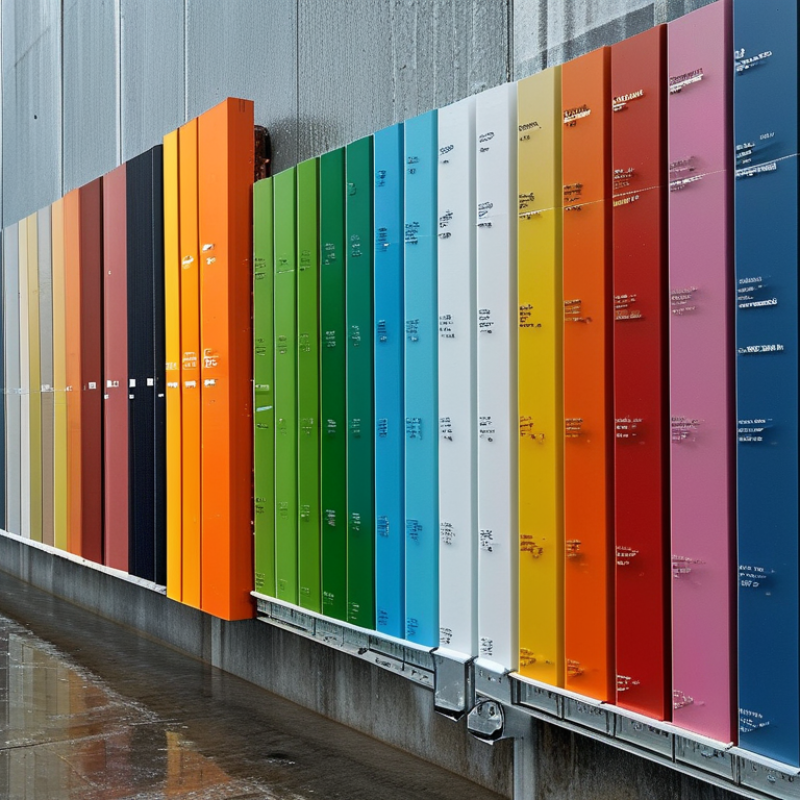
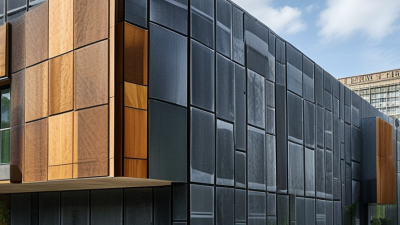
Cladding panels are not interchangeable. Solid aluminum panels suit lightweight façades, soffits, and balcony screens. Insulated sandwich panels combine exterior protection with thermal performance, making them practical for warehouses and cold-storage buildings. Fiber cement panels offer a textured, mineral appearance for residential and commercial walls. High-pressure laminate panels work well on ventilated façades, school buildings, and retail interiors. Each type needs a different fixing method.

Applications should guide the purchase. A coastal project may require corrosion-resistant coatings and stainless fixings. A high-rise façade needs tested wind resistance, secure joints, and controlled panel movement.

Wet climates demand drainage paths behind the cladding, not just sealed surface joints. Fire performance must match local building requirements. Ask for current test reports, installation instructions, coating data, and tolerances before comparing prices.

Do not judge quality from a small sample alone. Samples can mislead. I have seen attractive panels reveal weak edges after poor cutting or incorrect storage. Check core density, thickness consistency, color variation, and protective film removal procedures. Confirm whether the supplier can provide replacement panels years later. Details matter. A cheaper panel may become expensive when special brackets, extra labor, or damaged deliveries are included. Even experienced buyers can miss substrate movement, so review the complete wall assembly with a qualified façade engineer before ordering.
Compare Materials, Durability, and Weather Resistance

10 Cladding Panels Buying Tips for Global Buyers

Compare Materials, Durability, and Weather Resistance

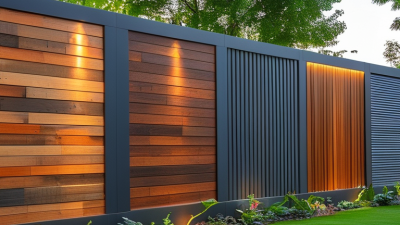
Material choice should follow the building’s climate, structure, and maintenance plan. Aluminum panels are lightweight and resist moisture, but dents and thermal movement need attention. Fiber cement offers strong dimensional stability, although cutting can create dust and exposed edges require sealing. High-pressure laminate provides many surface finishes, yet poor detailing may allow water behind the panel. Timber feels warm and natural, but it needs regular coating in harsh climates.

Check the panel’s UV, water absorption, freeze-thaw, impact, and corrosion data. Do not rely on attractive showroom samples alone. Request test reports, installation manuals, and batch samples before placing a large order. Coastal projects need salt-spray evidence. Cold regions need freeze-thaw testing. Hot areas need verified color retention. Ask whether the panel and fasteners were tested together. Small differences can become expensive failures. Very thick panels are not automatically better.

Review fire performance, panel weight, fixing methods, replacement access, and expected service life. Confirm tolerances before production, especially when importing across different measurement systems. A reliable supplier should explain limitations instead of promising perfect performance. Inspect packaging, edge protection, and moisture control during shipping. One overlooked detail is local workmanship; even excellent panels can fail with poor joints or blocked drainage. I would also budget for a mock-up wall. It may reveal glare, color variation, or movement that drawings hide. There is no flawless material, only a better match for the site.

Check Fire Safety, Thermal Performance, and Building Standards

Global buyers should treat cladding as a safety system, not a decorative skin. Ask for the complete fire-test report, not only a product certificate. Check the tested panel, insulation, cavity barriers, joints, and fixing method. NFPA 285 and EN 13501-1 address different test conditions, so one rating cannot replace local approval. Fire performance can change after a small design revision.

Tip: Match the test assembly to the project assembly. Verify flame spread, smoke development, combustibility, and fire-stopping details with an independent engineer. A neat certificate is not enough. Site inspections often reveal open cavities, crushed insulation, or missing barriers. Those details can undermine a strong laboratory result.

Thermal performance also affects operating cost. The International Energy Agency reports that buildings consume about 30% of global final energy and produce around 26% of energy-related emissions. Compare declared U-values, thermal bridges, moisture resistance, and air-tightness performance. Request data at realistic temperatures, not only ideal laboratory conditions. The UNEP Global Status Report for Buildings and Construction reported that the sector produced roughly 37% of global energy and process-related CO2 emissions in 2022. Better envelopes matter.

Tip: Check the full building standard before ordering. Confirm local wind loads, seismic rules, condensation control, and warranty limits. Ask who validates the calculations. Some buyers focus on insulation thickness and miss water movement. That is an expensive mistake. Keep a record of revisions, test evidence, and installer training. Mistakes happen; undocumented changes make them harder to correct.

Evaluate Dimensions, Installation Methods, and Maintenance Needs

Global cladding buyers should treat dimensions as a coordination issue, not a simple catalogue choice. Confirm panel length, width, thickness, tolerances, joint width, and corner details before ordering. A three-millimetre mismatch can disrupt window lines and create uneven shadow gaps. Request shop drawings and a full-size sample. Small samples hide alignment problems.

Installation methods must match the substrate, local weather, and installer capability. Compare mechanical fixing, concealed clips, rails, and bonded systems. Check movement allowances, drainage paths, fire detailing, and access for replacement panels. The 2023 Global Status Report for Buildings and Construction reports that buildings consume about 30% of global final energy. Poorly sealed interfaces can weaken thermal performance. Still, energy savings depend on the complete wall assembly, not cladding alone.

Maintenance planning should begin before purchase. Review cleaning frequency, coating warranties, spare-panel availability, and inspection access. The NACE IMPACT study estimated global corrosion costs at approximately 3.4% of worldwide GDP. Coastal salt, industrial dust, and trapped moisture can accelerate deterioration. Specify compatible sealants and avoid details that create water pockets. I have learned that the cheapest installation is rarely the cheapest ownership option. Yet maintenance estimates remain imperfect. Ask suppliers for documented service intervals, test standards, and repair procedures. A realistic inspection plan beats an impressive warranty.

10 Cladding Panels Buying Tips for Global Buyers? - Evaluate Dimensions, Installation Methods, and Maintenance Needs

No. Buying Tip What to Evaluate Practical Data or Benchmark Installation Questions Maintenance Considerations
1 Verify panel dimensions and tolerances Check nominal length, width, thickness, squareness, flatness, and dimensional tolerance. Confirm whether dimensions are actual or nominal. Compare the approved shop drawings with the measured panels. Allow for joint gaps and thermal movement rather than designing a wall with zero clearance. Will the panel size fit the structural grid, lifting equipment, access routes, and local transport restrictions? Accurate dimensions reduce cutting, replacement panels, and visible uneven joints during future repairs.
2 Match the material to the exposure Assess moisture, salt spray, ultraviolet radiation, freeze-thaw cycles, pollutants, impact risk, and expected service environment. Coastal, industrial, and high-humidity projects generally require stronger corrosion resistance and more careful detailing than sheltered inland façades. Are fasteners, brackets, membranes, sealants, and flashings compatible with the panel material and the local climate? Plan periodic inspections for corrosion, staining, coating failure, biological growth, and water accumulation.
3 Check structural and impact performance Review panel strength, stiffness, wind-load resistance, impact resistance, pull-out capacity, and allowable deflection. Required performance depends on building height, wind zone, panel span, support spacing, and local building regulations; do not select by thickness alone. Has a qualified designer checked the subframe, anchor loads, fixing spacing, and substrate condition for the actual site? Replace cracked, dented, loose, or distorted panels promptly to prevent water ingress and progressive damage.
4 Select the appropriate installation method Compare direct fixing, cassette systems, clip-and-rail systems, and rainscreen assemblies for speed, adjustability, and access. Rainscreen systems commonly use a drained and ventilated cavity; the cavity depth and ventilation openings must follow the project design and code requirements. Does the system provide drainage, ventilation, adjustment for tolerances, and safe replacement of individual panels? A mechanically accessible system can reduce the time and cost of removing damaged panels during maintenance.
5 Evaluate fire performance Request the complete tested assembly classification, including the panel, core, joints, insulation, cavity barriers, and supporting construction. Fire performance is an assembly property in many building regulations. A panel-only test may not represent the performance of the installed façade. Are cavity barriers, fire stops, joint details, and penetrations included in the approved design for the destination country? Inspect fire-stopping details after alterations, repairs, or installation of new services through the façade.
6 Confirm thermal and moisture control Assess thermal conductivity, insulation continuity, air leakage, vapour control, water shedding, and condensation risk. Thermal performance depends on the entire wall build-up, including thermal bridges at brackets, joints, corners, windows, and slab edges. Is there a continuous water-resistive barrier, correctly lapped flashings, sealed openings, and a defined drainage path? Keep weep holes and ventilation openings clear of debris; investigate interior dampness, staining, or mould immediately.
7 Review finish quality and colour consistency Check surface texture, gloss, colour variation, protective film, edge treatment, and batch consistency. Order a representative control sample or mock-up because lighting, viewing angle, production batches, and orientation can affect perceived colour. How will panels from different batches be distributed to avoid noticeable colour changes on one elevation? Use a soft cloth, clean water, and a compatible mild detergent; avoid abrasive pads, aggressive solvents, and unapproved pressure washing.
8 Check fixings and joint details Review fastener material, galvanic compatibility, joint width, sealant movement capability, corner details, and tolerance adjustment. Mixed metals can create galvanic corrosion in the presence of moisture, so contact between incompatible metals should be isolated where required. Are fastener locations, torque requirements, sealant primers, joint backers, and movement joints clearly documented? Inspect exposed fixings and sealant joints for rust, loosening, cracking, loss of adhesion, and shrinkage.
9 Calculate logistics and installation handling Consider panel weight, packaging, stacking limits, moisture protection, lifting points, storage conditions, and site access. Store panels flat or as specified by the system instructions, keep them off the ground, protect them from weather, and prevent edge damage during handling. Can the delivery vehicle reach the site, and are cranes, hoists, scaffolding, or lifting frames available for the panel format? Maintain an inventory of spare panels, colour references, installation drawings, and batch records for future replacement work.
10 Compare lifecycle cost and documentation Compare purchase price with fabrication, transport, installation labour, access equipment, cleaning, inspection, repair, and replacement costs. A lower initial price may result in higher lifecycle cost if the system needs frequent repainting, specialist cleaning, or difficult panel removal. Are installation manuals, test reports, safety data sheets, maintenance instructions, warranties, and compliance documents supplied in the required language? Set an inspection schedule based on exposure, typically including routine visual checks and detailed reviews after severe weather or accidental impact.
Buyer checklist: Confirm local code compliance, obtain project-specific test evidence, approve a physical mock-up, and coordinate the panel design with the complete wall assembly before placing the order.

Review Suppliers, Costs, Delivery Terms, and Warranty Coverage

Global buyers should treat supplier review as a technical audit, not a catalogue comparison. Request factory photographs, production capacity, material certificates, and recent export references. Ask who controls coating thickness and panel flatness. A low quote can hide inconsistent cores, weak packaging, or costly replacement claims. Verify payment milestones, inspection rights, and the responsible contact before signing. Keep every promise in writing.

Compare landed cost, not unit price. Include panels, trims, fasteners, protective film, inland transport, ocean freight, insurance, duties, and installation waste. Ask for prices under clearly stated Incoterms and currencies. Currency changes hurt margins. I have seen “competitive” offers become expensive after port handling charges appeared. Request a line-by-line quotation with validity dates. Allow a small contingency, because forecasts are rarely perfect.

Delivery terms need measurable dates, not vague assurances. Confirm production lead time, loading port, documentation, carton limits, and delay procedures. For a project site, sample one packed pallet before ordering containers. Check moisture barriers, corner protection, labels, and unloading equipment. Warranty coverage should specify coating failure, delamination, color change, exclusions, claim evidence, and response times. Ask whether labor and transport are covered. A long warranty means little if the claims process is unclear. Reconsider assumptions after reviewing local climate, storage conditions, and installer skill. The overlooked detail may be the expensive one.