7 Tips for Choosing WPC Decking Boards
Choosing Wpc Decking Boards is not simply a matter of selecting the prettiest color. A deck must survive rain, sunlight, foot traffic, temperature changes, and imperfect installation. One board may look convincing in a showroom but feel too hot under afternoon sun. Another may resist moisture yet show scratches near a busy doorway.
Mike Guertin, a veteran deck builder and author, offers a useful reminder: “A deck is a system, not just a surface.” That idea shapes this guide. The seven tips examine the details that often decide long-term performance, including board composition, capped or uncapped surfaces, dimensions, slip resistance, fastener compatibility, maintenance demands, and warranty language. These points matter because Wpc Decking Boards behave differently from natural timber. They expand and contract, require proper spacing, and may reveal installation mistakes more clearly than expected.
Real projects are rarely perfect. Substructure spacing may be slightly inconsistent. A garden can drain poorly. Children may drag metal chairs across the boards. These ordinary details deserve more attention than polished product photographs. We will also question common assumptions, such as the belief that thicker boards are always stronger or darker colors are always more attractive. They may not be.
The goal is practical judgment, not a flawless promise. By comparing technical specifications with site conditions, homeowners and contractors can choose Wpc Decking Boards with greater confidence, fewer surprises, and a more realistic view of maintenance.
Understanding WPC Decking Materials and Construction
Choosing WPC decking starts with understanding its construction.
WPC combines wood flour or fibers with thermoplastics, stabilizers, pigments, and coupling agents. The blend is heated, mixed, and extruded into boards.
According to Grand View Research’s 2024 market report, the global wood-plastic composites market reached about USD 7.49 billion in 2023.
The report also projects strong growth through 2030. Demand is rising, but product quality still varies.
Check the core before admiring the surface.
A dense, consistent profile usually resists crushing better than a lightweight, porous one. Ask for the wood-to-polymer ratio, recycled content, and water-absorption test results. ASTM D7032 provides performance criteria for composite decking, including strength and durability testing. Capped boards add a protective polymer layer, yet the cap can scratch during installation. That detail is easy to miss.
Look closely.
Construction affects service life as much as material selection.
Leave the manufacturer’s recommended expansion gaps at board ends and joints. Provide airflow beneath the deck, especially over damp ground. Use compatible screws and avoid overtightening, which can deform hollow profiles. Check slip resistance when the surface is wet. A 2023 building-materials review by the European Commission’s Joint Research Centre highlights moisture, heat, and maintenance as important factors in material durability.
I would not treat every advertised lifespan as a promise.
Sun exposure, poor spacing, and weak framing can shorten it dramatically.
Reconsider the subframe before blaming the boards.
Choosing the Right Board Size, Surface Texture, and Color
7 Tips for Choosing WPC Decking Boards
Tip 1: Measure the deck carefully before choosing board dimensions. Wider boards cover areas faster, but they may show more visible movement. Narrower boards can create a more traditional rhythm. Allow space for ventilation, drainage, and thermal expansion. A tight layout often looks neat at first. It can become troublesome later.
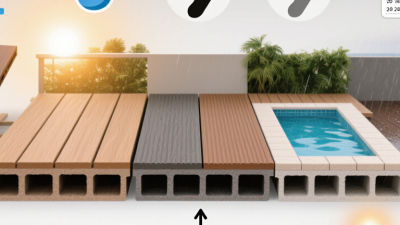
Tip 2: Match the surface texture to real use. Deep grooves can improve grip near pools or garden entrances. However, they may collect leaves and require more cleaning. A lightly brushed finish feels comfortable under bare feet. Test a sample after rain, not only under showroom lights. I once selected a highly textured board that looked excellent but trapped dirt quickly. That choice needed more maintenance than expected.
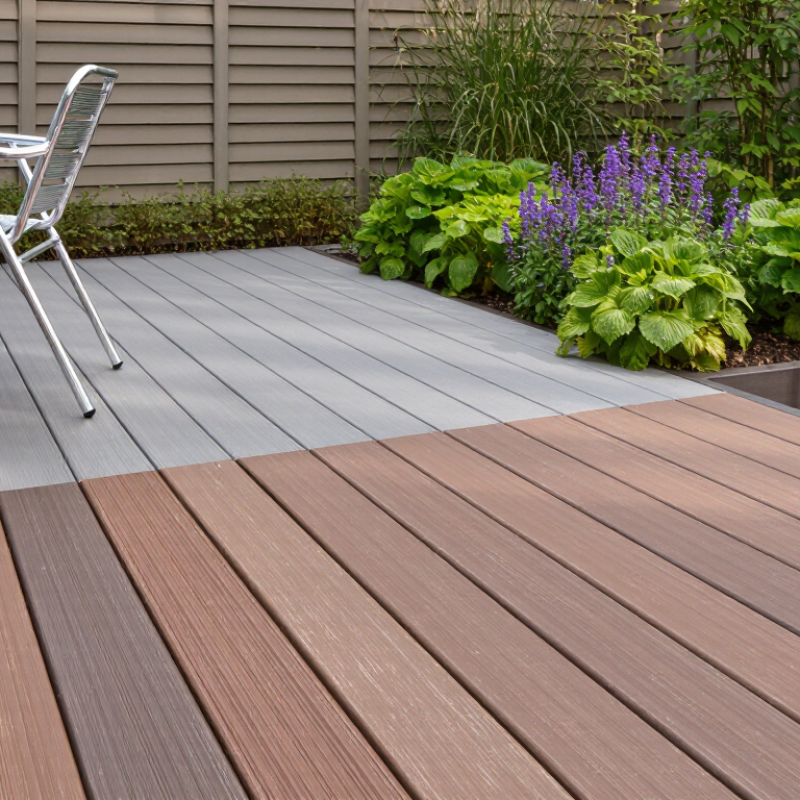
Tip 3: Treat color as a practical decision, not decoration alone. Dark boards absorb more heat in strong sunlight. Light colors can make a small terrace feel wider and cooler. Check samples beside walls, furniture, and plants. Colors may appear different in morning and afternoon light.
Tip 4: Inspect several boards for shade consistency and straightness. Slight variations can be normal, but large differences may disturb the finished pattern. Ask for installation guidance from qualified professionals. Their advice should cover joist spacing, fasteners, edge details, and local weather conditions. These details matter.
7 Tips for Choosing WPC Decking Boards
Typical nominal board profiles to compare before selecting surface texture and color
Wider boards can create a cleaner visual appearance with fewer joints, while thicker profiles generally offer greater stiffness and a more substantial feel. Choose a grooved or textured surface for improved slip resistance, and consider lighter colors when reducing heat absorption is important. Dimensions shown are representative nominal sizes; always confirm the exact specifications, installation spacing, and load requirements for the selected product.
Checking Safety, Environmental Standards, and Product Quality
7 Tips for Choosing WPC Decking Boards
When I inspect WPC decking, I begin with safety rather than appearance. Check the slip-resistance rating, especially for poolside areas and rainy climates. Ask for test reports covering load strength, fire performance, and harmful substance limits. The documents should identify testing methods, dates, and independent laboratories. Do not trust vague phrases such as “eco-safe” without measurable evidence. Small details matter. Inspect the board edges for sharp splinters, uneven surfaces, or weak locking profiles. A stable installation also needs compatible clips, joists, and drainage space.
Environmental standards deserve the same attention. Look for recycled-content information and evidence of responsible raw-material sourcing. Some products use recycled plastic, but the percentage may be unclear. Ask whether the board can be recycled after removal. Also check production emissions, packaging, and disposal guidance. I once focused too much on recycled content and overlooked transport distance and maintenance requirements. That was incomplete thinking. Environmental performance involves the full product life cycle, not one attractive number.
For quality, compare sample boards in daylight and touch their surfaces. Look for consistent color, even embossing, and a solid core without visible voids. Request water-absorption, weathering, and dimensional-stability data. Ask how much the boards expand in heat. A supplier who explains limitations is often more reliable than one promising perfection. Read the warranty carefully, including cleaning rules and installation conditions. Keep sample pieces outdoors for several weeks if possible. Fading or warping may appear slowly. Perhaps I should have tested longer.
Evaluating Installation Requirements, Warranty, and Overall Cost
7 Tips for Choosing WPC Decking Boards
Evaluate the installation requirements before comparing colors or surface textures. Check joist spacing, board direction, ventilation, drainage, and approved fasteners. ASTM D7032 covers performance requirements for wood-plastic composite decking and guardrail systems. Local building rules may still require additional details. Do not assume every WPC board fits the same substructure. It often does not. Ask for a written installation guide and confirm whether trained installation is required. On site, a small drainage mistake can leave water trapped beneath the boards.
Warranty language deserves slow reading. Separate product defects, color change, stains, labor, and installation errors. A long warranty may exclude poor ventilation or unauthorized fasteners. Request the claim process, required maintenance records, and the original seller’s responsibilities. Keep invoices and batch information. That paperwork feels boring, but it can protect the claim later. I would also compare surface temperature, slip resistance, and expected fading under local sunlight. Appearance is not the whole performance story.
Calculate the complete cost, not only the board price. Include framing repairs, clips, stairs, fascia, waste, delivery, permits, and labor. The 2024 Cost vs. Value Report estimated a national average composite deck addition at about $24,206, with roughly 68% recovered in resale value. Regional labor costs can change that result sharply. The 2024 U.S. Houzz & Home Study reported a $6,000 median spend for outdoor upgrades, showing how quickly smaller projects can expand. Compare at least three itemized quotes. The cheapest quote may omit critical preparation. Recheck it.