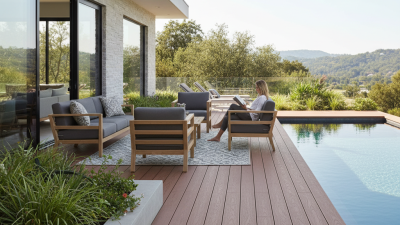
Choosing Wpc Decking Boards is not simply a matter of matching a color to your garden furniture. The right boards must suit your climate, walking habits, installation method, and long-term maintenance expectations. A sunny balcony, a shaded poolside, and a wet coastal terrace can place very different demands on the same product.
This guide introduces seven practical tips for making a more informed decision. It examines board composition, surface texture, dimensions, drainage, heat performance, installation requirements, and supplier reliability. These details matter when rainwater collects between boards or afternoon sunlight makes a dark surface uncomfortable under bare feet. Product specifications should be checked carefully, including slip resistance, water absorption, load capacity, warranty terms, and recommended joist spacing. Independent testing can add confidence, but certification names alone do not guarantee perfect performance.
Real projects also teach useful lessons. A sample may look attractive indoors yet appear much lighter in direct sunlight. A hollow board may reduce weight, but it can require more precise support during installation. Even experienced installers sometimes underestimate expansion gaps. That mistake can become visible after seasonal temperature changes. No decking board is perfect. The best choice depends on honest priorities and site conditions.
Before ordering, compare physical samples, installation guides, and verified customer feedback. Ask the supplier how the boards perform after several winters, not just how they look on delivery day. A careful selection process may take longer, but it can prevent uneven surfaces, unexpected repairs, and disappointing color changes later.
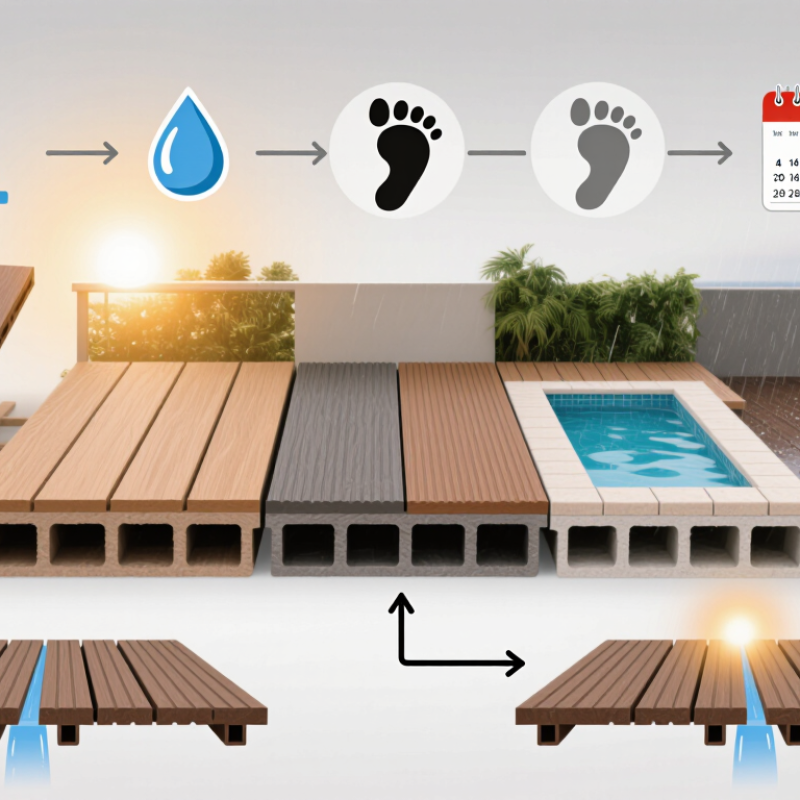
WPC decking is made by combining wood fiber or flour with a thermoplastic polymer, often polyethylene or polypropylene. Mineral fillers, pigments, and stabilizers may also be added. The wood content gives a textured, natural appearance, while the polymer helps resist moisture and decay. A protective cap can improve stain and color resistance, but it does not make the board maintenance-free.
Check the wood-to-polymer ratio before buying. A higher wood content may look warmer, yet it can absorb more moisture. Examine the board’s surface and edges for consistent density. Ask whether the product uses recycled materials and how its quality is tested. Confirm the expected span, load rating, and suitable joist spacing. Inspect the fastening system, because poor clips can cause movement or uneven gaps. Compare boards from different batches when possible. Color variation happens.
I once underestimated thermal expansion on a sunny balcony. The boards looked stable during installation, then shifted slightly after several hot days. Leave the manufacturer’s recommended gaps, especially at ends and walls. Use proper ventilation beneath the deck to reduce trapped moisture. WPC usually resists splinters and routine staining, but dark colors can become hot under direct sunlight. A sample viewed outdoors is more useful than a showroom sample. Check local climate conditions before choosing the profile and surface finish.
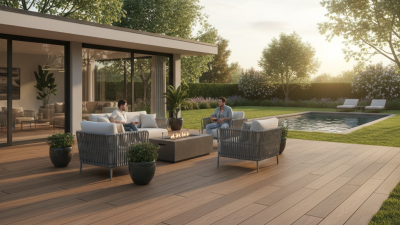
7 Tips for Choosing WPC Decking Boards
Matching board performance to your climate and intended use matters more than color. In hot regions, select boards with strong UV resistance and documented thermal stability. NOAA’s 2024 climate report recorded the year as 1.46°C above the twentieth-century average. Dark boards can become uncomfortable under direct summer sunlight. I would request tested surface-temperature data, not rely on showroom samples.
Wet climates need low water absorption, effective drainage, and textured surfaces for safer walking. ASTM D7032 evaluates composite lumber for properties such as water absorption, flexural performance, and durability. Check the test scope carefully. A passing result does not guarantee identical performance beside a pool or in constant shade. Coastal areas also deserve corrosion-resistant fasteners and adequate ventilation beneath the boards.
Cold regions place different demands on decking. Repeated freezing and thawing can expose weak edges, poor installation, or insufficient joist support. Follow the manufacturer’s tested span limits, but question vague claims. Heavy furniture, outdoor kitchens, and frequent gatherings require stronger structural performance than a lightly used balcony. ASCE 7-22 provides recognized methods for evaluating local environmental loads, including snow and wind. Real installation experience still matters. Even excellent boards can warp when installers ignore expansion gaps, drainage, or afternoon heat.
WPC decking boards differ in profile, dimensions, and surface design, not just colour. Tip 1: Match the profile to the load. Hollow boards reduce weight, while solid boards usually offer stronger screw retention. The Freedonia Group’s decking analysis identifies board construction and installation method as important specification factors. Do not choose by appearance alone.
Tip 2: Check actual dimensions. A 150 mm board may cover less after its side clips are fitted. Tip 3: Compare joist spacing with the manufacturer’s tested span. ASTM D7031 and ASTM D7032 provide guidance for evaluating composite decking performance and structural use. Narrower spacing can reduce bounce, although it increases material and labour costs. That trade-off is easy to miss.
Tip 4: Study the surface pattern in daylight. Deep grooves can improve visual texture, but they may collect dust and moisture. Tip 5: Select capped or uncapped surfaces according to exposure. A 2024 market report from Grand View Research places durability and low maintenance among major WPC demand drivers. The report also estimates continued global market growth through the decade. Exact results still depend on climate and installation quality.
Tip 6: Request colour samples beside your home’s walls and paving. Printed samples can look warmer than real boards. Tip 7: Ask for test data, including slip resistance, water absorption, and flexural performance. Product sheets are useful, but field experience matters too. I once underestimated drainage around a deck; even good boards showed dirt faster than expected. Surface design deserves practical inspection, not a quick catalogue decision.
| Tip | What to Compare | Common WPC Decking Option | Typical Dimensions | Surface Design | Performance Considerations | Recommended Use |
|---|---|---|---|---|---|---|
| 1 | Choose the correct board profile |
Solid profile Dense construction with no internal hollow channels. |
Width: 135–150 mm Thickness: 20–25 mm Length: 2.9–4.0 m |
Brushed wood grain, embossed grain, or smooth matte finish | Usually heavier and more resistant to impact. It can be easier to cut and less vulnerable to localized crushing, but it generally costs more to transport and install. | High-traffic areas, steps, pool surrounds, and commercial applications |
| 2 | Compare hollow and semi-solid construction |
Hollow or semi-solid profile Internal chambers reduce material use and board weight. |
Width: 140–160 mm Thickness: 21–25 mm Length: 2.9–4.0 m |
Fine grooves, 3D wood embossing, or dual-sided textures | Lower weight can simplify handling and reduce substructure loads. Ends should be capped or otherwise protected to limit water and debris entry. | Residential balconies, roof terraces, and standard garden decks |
| 3 | Check board width and installation coverage |
Standard-width board A balanced option for efficient coverage and manageable installation. |
Common width: 140–150 mm Typical installed coverage: approximately 145–160 mm per board, depending on the required side gap |
Linear grain or repeating wood texture | Wider boards may reduce the number of boards and fasteners required, but the supporting joist layout and required expansion gaps must still be followed. | Most residential decking layouts and medium-sized outdoor spaces |
| 4 | Match thickness to joist spacing |
20–25 mm decking board Select the thickness together with the manufacturer’s tested span requirements. |
Typical thickness: 20, 22, or 25 mm Common joist spacing: approximately 300–400 mm centre-to-centre, subject to the product specification |
Anti-slip grooves or textured embossing | Thicker boards are not automatically suitable for wider joist spacing. Fastener position, span limits, expected loads, and local building requirements should be checked together. | Projects where long-term stability and reduced flexing are priorities |
| 5 | Evaluate the surface texture for safety |
Grooved or embossed surface Texture is formed during extrusion, brushing, or embossing. |
Surface groove depth: commonly about 1–3 mm Board thickness: generally 20–25 mm |
Fine grooves, deep grooves, wood-grain embossing, or mixed textures | Texture can improve underfoot grip, but drainage, cleaning, footwear, algae growth, and wet conditions also affect slip performance. Ask for wet-slip test data where safety is critical. | Garden paths, balconies, poolside zones, and areas exposed to rain |
| 6 | Consider capped versus uncapped boards |
Capped composite board A polymer protective layer surrounds one or more visible surfaces. |
Core thickness: commonly 20–25 mm Cap layer: product-specific and usually measured in fractions of a millimetre |
Multi-tonal wood grain, brushed finish, or realistic embossed pattern | A quality cap can improve resistance to staining, moisture absorption, fading, and surface wear. The cap must remain intact during cutting and installation. | Dining areas, children’s play areas, and decks requiring easier cleaning |
| 7 | Allow for expansion, color, and maintenance needs |
Board system with matching clips and edge trims Include fasteners, starter clips, end clips, fascia, and finishing accessories. |
End gap: often around 3–6 mm, depending on temperature and board length Side gap: commonly about 5–8 mm, subject to the installation guide |
Single-color, variegated, two-tone, or weathered wood appearance | WPC expands and contracts with temperature changes. Leave ventilation beneath the deck, maintain drainage, and follow the specified gaps. Color may weather during the first months after installation. | All outdoor projects, especially installations with long boards or strong temperature variation |
Durability begins with the board’s structure, not its surface color. Check the wood-plastic composition, core density, and resistance to moisture, insects, and ultraviolet exposure. Ask for test data on bending, water absorption, and color stability. A heavier board may feel stronger, but weight alone proves little. Inspect the edges for voids or uneven filling. Small defects can become larger after seasonal expansion and contraction. Allow the movement gaps recommended by the installation instructions.
Maintenance should fit your actual routine. Choose boards with a textured surface that hides light scratches and drains rainwater quickly. Sweep leaves from between the boards, especially after wet weather. Clean spills before they dry into oily patches. Avoid harsh chemicals unless the supplier confirms their safe use. I once underestimated shaded areas; trapped moisture made cleaning more frequent than expected. That mistake changed how I judge drainage and ventilation.
Safety deserves equal attention. Look for tested slip resistance, stable fastening systems, and surfaces that remain comfortable during hot weather. Check stair nosing, board spacing, and the smoothness of cut ends. Secure the substructure before judging the decking itself. Follow local construction guidance and use compatible screws and clips. A sample board helps reveal glare, heat, and slipperiness after rain. Never rely only on attractive photographs. Real conditions are less forgiving.
Installation requirements can decide whether a deck stays stable after winter. Check the required joist spacing, ventilation gap, drainage path, and fastener type. Do not assume every WPC board fits the same frame. ASTM D7032 provides performance criteria for composite decking, but local building codes still control the installation. Measure the substructure carefully. A small spacing mistake can create visible sagging. I have learned that a quick measurement often becomes an expensive repair.
Read the warranty like a contractor, not a salesperson. Check coverage length, color-fade limits, structural exclusions, labor coverage, transfer rules, and registration deadlines. Some warranties exclude poor ventilation, standing water, incorrect fasteners, or unsupported board ends. Keep invoices, photographs, and installation records. They may matter years later. The wording can be surprisingly narrow.
Calculate the complete cost before comparing board prices. Include joists, clips, screws, edging, delivery, cutting waste, labor, and future cleaning. The 2024 Cost vs Value Report estimated a composite deck project recovered about 68% of its cost at resale. That figure is useful, but regional labor and property values can change the result. Request an itemized quote. Then compare expected maintenance over ten years. A cheaper board may need more frequent cleaning or replacement. I still leave a contingency budget, because real projects rarely follow the first spreadsheet.