As a leading plastics recycler and producer of green composite.

Leave Your Message

Top Terracotta Panel Suppliers for Global Buyers

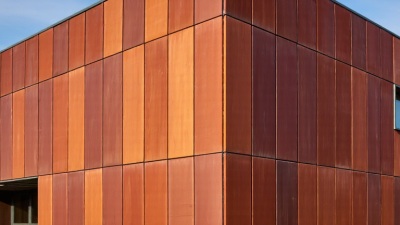
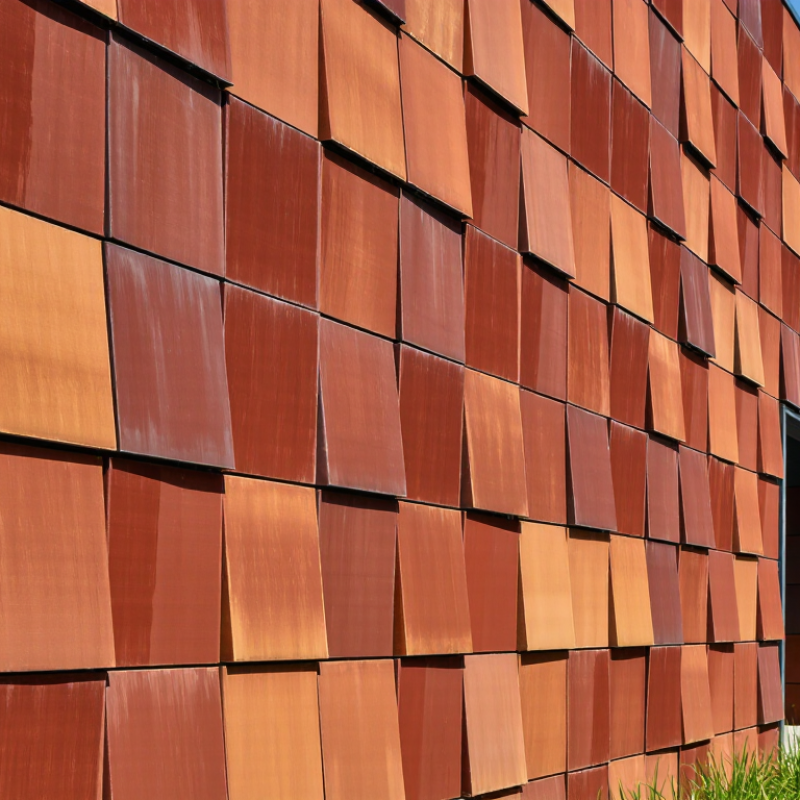
Terracotta Panels bring fired-clay color, texture, and depth to building façades. For global buyers, choosing a supplier is not only a price comparison. It means checking panel dimensions, finish consistency, fixing systems, test documentation, production capacity, and shipping experience. A sample can reveal subtle color variation that a digital image hides. Samples matter.

The industry context also rewards careful material choices. The 2023 Global Status Report for Buildings and Construction, published by UNEP and the Global Alliance for Buildings and Construction, estimated that buildings and construction produced 37% of global energy- and process-related CO₂ emissions in 2022. That figure does not measure terracotta panels alone. It does underline why buyers should request transparent product data and assess durability, maintenance, and transport—not rely on broad sustainability claims.

Architect Louis Kahn captured the importance of façade surfaces: “The sun never knew how beautiful it was until it fell on the wall of a building.” For buyers, that idea becomes practical: ask how a panel’s color and texture appear in daylight, shade, and changing weather. Compare technical submittals with completed projects, and confirm that proposed fixing details suit the project’s design and local conditions. No supplier is best for every climate or budget. Even a polished brochure can leave questions unanswered. A sound shortlist pairs documented performance with responsive technical support and verifiable references.
Top Terracotta Panel Suppliers for Global Buyers

What Defines Terracotta Panels: Extruded Ceramic Facade Units Under EN 14411

Top Terracotta Panel Suppliers for Global Buyers

What Defines Terracotta Panels: Extruded Ceramic Facade Units Under EN 14411

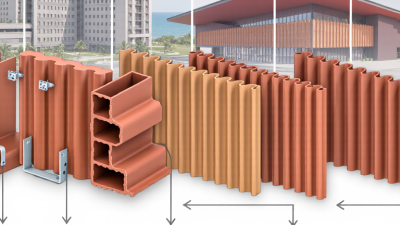
Terracotta panels are ceramic facade units made from prepared clay. In extrusion, the clay body is pushed through a shaped die, then cut, dried, and fired. This process can create hollow profiles and consistent edges, though firing may still cause slight color or size variation. Real materials are rarely perfectly uniform.

EN 14411 sets requirements and classification methods for ceramic tiles, including extruded products. Classification depends on factors such as forming method and water absorption. Buyers should check the declared product group, dimensions, tolerances, and relevant performance data rather than relying on the word “terracotta” alone. Ask for test documentation and confirm which standard requirements apply to the specific panel.

A panel’s appearance is only part of the specification. Review breaking strength, frost resistance where relevant, and the proposed fixing details with the project team. The standard addresses the ceramic product; it does not, by itself, prove that a complete facade system will perform in every building or climate. A fired sample can look convincing, yet it cannot show every batch variation or installation challenge. Small details matter. Check samples alongside technical documents, and allow for reasonable variation when setting visual expectations.
How Panels Are Made: Extrusion, Drying, and High-Temperature Firing

Terracotta panels begin with a carefully prepared clay body. Producers adjust moisture so the mixture moves evenly through an extrusion die. The die shapes a continuous profile, which is cut into panels. Some lines remove trapped air before extrusion; this can help limit weak spots. Small changes in clay composition may affect color and shrinkage.

Drying comes next. Panels rest in controlled conditions until excess moisture leaves gradually. If drying is too fast, edges may crack or pieces may warp. The dried panels enter a kiln for high-temperature firing. Heat strengthens the clay and develops its final color, but the firing schedule depends on the clay and panel design. Quality checks often include dimensions, surface flaws, and water absorption. Even careful production has variation. Buyers should ask how tolerances are measured.

Tips: Request samples from more than one production batch. Check the panel edges and back, not only the visible face. Ask for firing and test records, plus guidance on installation and handling. A sample may look perfect, yet large orders can reveal shade differences. That detail deserves a closer look.

How Water Absorption Is Classified: ISO 13006 Bands from ≤0.5% to >10%

ISO 13006 classifies ceramic tiles by water absorption, expressed as a percentage of dry mass. The familiar bands are BIa at ≤0.5%, BIb above 0.5% to 3%, BIIa above 3% to 6%, BIIb above 6% to 10%, and BIII above 10%. Small numbers matter. A panel at 0.4% belongs to a different group from one at 0.7%.

For buyers comparing terracotta façade panels, these bands are useful, but they are not a complete performance score. Higher absorption generally means a more porous body; it does not, by itself, prove that a panel will fail outdoors. Ask suppliers for test reports showing the declared value, test method, and product batch. Check that the classification applies to the actual panel, not merely a similar tile.

Also review freeze-thaw suitability, dimensions, surface finish, and installation details for the project climate. After rain, water can linger around an unsealed cut edge or fixing point. That detail may matter more than a headline percentage.

I would not rely on a broad “low absorption” claim without the underlying report; specifications can be easy to misread.

Which Tests Matter: ASTM C373 Absorption and C648 Breaking Strength

For global buyers, supplier comparisons should include test evidence, not just finish photographs. Terracotta panels may look alike while differing in density, firing, and water uptake. Ask for reports tied to the actual product specification and production batch. A report can look reassuring. It may still describe a different panel.

ASTM C373 measures water absorption in ceramic products. The result helps indicate how much water a tested specimen takes up under the method’s conditions. Higher absorption can be relevant to moisture exposure, but it does not predict every aspect of outdoor performance. Ask whether the tested pieces match the panel’s thickness and finish. Small details matter. Also confirm the sampling date and laboratory identification.

ASTM C648 evaluates breaking strength under a specified loading setup. For panels, the reported value matters alongside dimensions, support conditions, and intended installation. A strong result on a small specimen does not automatically represent a large panel with different support spacing. Request the full report, not only a pass statement, and check whether the test method fits the product. This comparison can feel tedious. Still, it is better than discovering a mismatch after delivery.

Top Terracotta Panel Suppliers for Global Buyers — Which Tests Matter: ASTM C373 Absorption and C648 Breaking Strength

Comparison Dimension Test or Reference What to Request from Each Supplier How to Interpret the Data Buyer Check
Water absorption ASTM C373 Test report stating the measured water absorption percentage, test method and edition, specimen identification, and results for the offered product. Absorption is reported as a percentage. ASTM C373 is a measurement method; it does not by itself set a universal acceptance limit for every terracotta panel. Compare results with the project specification and confirm that the tested product matches the proposed panel body and finish.
Common ceramic-tile absorption classes ISO 13006 / ANSI A137.1 classification references Ask the supplier to identify the claimed class and provide the supporting absorption test report. Common class bands are: impervious, ≤0.5%; vitreous, >0.5% to 3%; semi-vitreous, >3% to 7%; and non-vitreous, >7%. Confirm the applicable standard edition and product scope. Do not assume a class designation alone establishes suitability for a particular façade, climate, or installation.
Breaking strength ASTM C648 Test report with breaking-strength results, units, specimen identification, panel or tile thickness, and the test method edition. C648 measures the breaking strength of ceramic tile specimens. It is a test method, not a single universal pass/fail limit for all terracotta panel systems. Compare results against the project requirements and verify that the tested specimen geometry represents the specified product.
Tested product identity Report traceability Product code or neutral sample ID, production batch or lot, manufacturing date where available, and a description of the body and finish. Results are meaningful for procurement only when they can be linked to the product being quoted. Check that the report is not for a different thickness, finish, or product family.
Sampling and laboratory details Laboratory test documentation Laboratory name, report date, number of specimens tested, individual results where reported, and any deviations from the standard method. Sample count and test conditions help buyers understand the scope and limitations of the reported data. Request clarification if results are presented only as an unsupported marketing claim or a single unexplained figure.
Project-specific acceptance criteria Project specification and applicable product standards A written confirmation showing how the submitted absorption and breaking-strength results meet the project’s stated requirements. Acceptance limits depend on the specified product, use, and applicable standards; neither test method alone defines every project’s requirements. Have the design team confirm suitability for the intended façade assembly, support conditions, exposure, and installation method.

Use this table to compare test documentation, not as a substitute for project-specific engineering requirements or the full text of the applicable standards.

How Global Buyers Compare Suppliers: Certifications, Test Reports, and References

When global buyers compare terracotta panel suppliers, certificates are useful only when their scope matches the product being purchased. Ask for the issuing body, validity dates, and the exact panel type covered. A certificate for one finish or production site may not apply to another. Check carefully.

Request test reports that identify sample dimensions, firing conditions, test methods, and results. Confirm that the tested sample resembles the proposed panels in thickness, finish, and manufacturing process. Reports should be traceable to a laboratory and recent enough to reflect current production. A polished PDF is not proof by itself.

Tips: Ask suppliers to explain any failed or borderline result, not just send a pass certificate. Compare answers in writing. Then contact references for projects with similar climates, building heights, and installation systems. Ask how panels arrived, whether color varied between batches, and how replacement pieces were handled. References can be selective, so seek details rather than praise. I would also request photos of completed work, but photos cannot confirm long-term performance. Paperwork narrows risk; site experience helps reveal what the paperwork misses. One point is easy to overlook: clear, consistent answers matter as much as a large document folder.