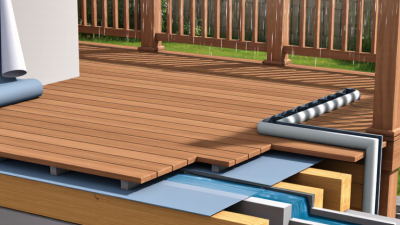
Choosing the right Metal Decking supplier requires more than comparing prices, product photographs, or delivery promises. A dependable supplier should demonstrate manufacturing experience, engineering support, documented quality systems, and consistent regional availability. These details matter when deck panels arrive at a busy site, where incorrect dimensions can delay concrete placement and increase labor costs.
Larry Williams, a longtime Steel Deck Institute technical leader, stated, “Steel deck is an engineered product, not simply a sheet of formed steel.” This principle deserves attention. Metal Decking must match span requirements, gauge, finish, fire performance, diaphragm design, and local project specifications. Strong suppliers provide clear load tables, current certifications, installation guidance, and responsive technical communication.
This overview examines leading Metal Decking suppliers worldwide through practical criteria. It considers product range, production capacity, testing practices, export experience, and customer support. Large manufacturers may offer impressive scale. Smaller regional producers can sometimes respond faster and understand local construction habits better. Neither advantage is universal.
Real projects are rarely perfect. Weather changes. Drawings are revised. Shipments arrive in difficult sequences. A supplier’s response under pressure may reveal more than its brochure. This guide therefore looks beyond reputation and asks harder questions about traceability, tolerances, service continuity, and technical accountability.
The ranking is not absolute. Market conditions change. Regional availability matters. Buyers should verify current certifications, lead times, and design responsibilities before making a final decision. Good research reduces risk, but it cannot replace project-specific engineering judgment.
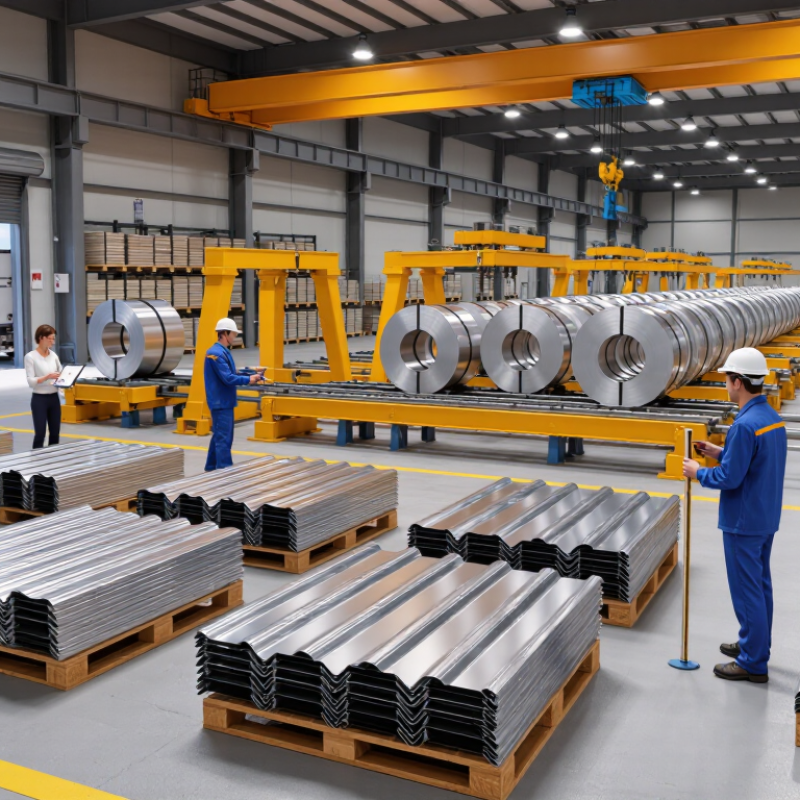
Metal decking is a profiled steel sheet used in floors, roofs, and composite construction. It works as permanent formwork during concrete placement. In composite floors, its ribs bond with concrete and improve structural performance. The finished slab can reduce temporary supports and speed installation. Common profiles range from shallow roof sheets to deeper floor decks. Selection depends on span, load, fire rating, corrosion exposure, and concrete thickness.
According to World Steel Association’s World Steel in Figures 2024, global crude steel production reached about 1.89 billion tonnes in 2023. This figure does not represent decking alone. It does show the scale of the steel supply network supporting global construction. The Steel Deck Institute Design Manual identifies deck sheets as structural elements, not simple covers. They can support wet concrete, transfer diaphragm forces, and help distribute loads. However, a specification can look correct and still fail in practice. The weak point is often connection spacing, not sheet strength.
Tips: Check span tables before ordering. Confirm the design thickness, coating, and rib direction. Ask suppliers for test data and installation details. Inspect laps and fasteners on site. Small gaps matter. Local moisture and fire requirements also deserve careful review. Some projects overestimate deck savings because labor access remains difficult. That assumption needs testing.
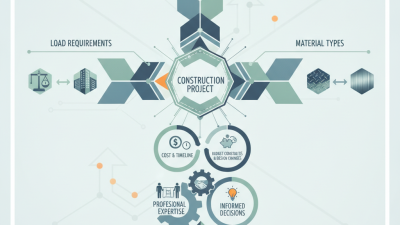
Top Metal Decking Suppliers Worldwide
Key Types of Metal Decking Available Worldwide
Metal decking is not one universal product. Its profile, coating, gauge, and structural role change across regions. Roof deck usually supports insulation, membranes, and maintenance loads. Floor deck may act as permanent formwork or participate in composite slabs. The distinction is not always neat.
Composite floor deck includes ribs that improve mechanical bonding with concrete. Re-entrant profiles often provide stronger slab integration and easier service routing. Form deck supports wet concrete but normally contributes little after curing. Cellular deck adds a continuous underside, creating a cleaner ceiling and useful space for electrical services. Deep roof deck can span longer distances, reducing secondary steel in large warehouses.
The Steel Deck Institute’s 2022 design guidance identifies deck geometry, bearing length, fasteners, and construction-stage loading as critical checks. These details matter on site. A thin sheet can look adequate before concrete placement, yet deflect noticeably under wet concrete. Eurocode 4, EN 1994-1-1, also requires careful assessment of composite action and shear connection. Global steel demand provides context: World Steel Association’s World Steel in Figures 2024 reported 1,882.6 million tonnes of crude steel production in 2023. That scale does not guarantee consistent deck quality. Local testing, coating verification, and engineer-reviewed load tables remain essential. I would not select a profile from span tables alone. Support conditions, fire design, corrosion exposure, and regional standards can change the answer.
Representative nominal profile depths commonly used in global steel decking applications
Metal decking is typically classified by its structural application. Form deck is commonly produced at shallow depths, roof deck is often available around 1.5 inches, composite floor deck commonly uses approximately 2-inch profiles, and cellular floor deck generally uses deeper profiles to accommodate service distribution and increased structural depth. Actual dimensions vary according to project design, loading requirements, steel thickness, and regional standards.
How to Evaluate Global Metal Decking Suppliers
Global demand does not guarantee supplier quality. The World Steel Association’s October 2024 Short Range Outlook forecasts 1.751 billion tonnes of steel demand in 2024 and 1.772 billion tonnes in 2025. This scale creates choices, but also confusion. Evaluate the supplier’s production experience, not only its catalogue. Request mill certificates, coating details, load tables, and recent project references. Confirm whether the decking matches required structural standards, such as EN 1090 or applicable regional specifications. Documents should be traceable to each shipment.
Technical support matters. A reliable supplier should explain span limits, fastening patterns, fire performance, and deflection assumptions. Ask for drawings that reflect your actual slab depth and support spacing. Generic tables can mislead. The OECD Steel Outlook 2024 highlights continuing global capacity expansion and pressure on steel markets. Therefore, compare lead times, raw-material sources, and backup production capacity. Low pricing may hide thinner gauges, inconsistent coating thickness, or expensive port delays. I have seen small specification differences create major installation problems. That risk deserves attention.
Tips: Build a comparison sheet with seven fields: steel grade, thickness tolerance, coating mass, certification, testing method, lead time, and warranty terms. Check certificates with the issuing body when possible. Inspect packaging photographs before dispatch. Include landed cost, not just factory price. A trial order can reveal quality faster than a polished sales presentation. No evaluation is perfect. Recheck assumptions when climate, fire rules, or transport routes change.
| Evaluation Dimension | What to Check | Relevant Technical or Commercial Data | Recommended Evidence | Suggested Weight | Evaluation Priority |
|---|---|---|---|---|---|
| Product Standards | Whether the supplier manufactures decking to recognized structural and material standards. | Common references include ASTM A653/A653M for galvanized sheet steel, EN 10346 for continuously hot-dip coated steel products, and applicable national structural-steel standards. | Current product datasheets, mill certificates, declarations of performance, and third-party test reports. | 15% | Critical |
| Structural Performance | Load-carrying capacity, span capability, deflection behavior, and composite-slab performance. | Review published span tables, steel thickness, yield strength, rib geometry, concrete thickness requirements, and design assumptions for each profile. | Engineer-approved load tables, tested design values, calculation software output, and project-specific structural calculations. | 18% | Critical |
| Material Thickness | Consistency between ordered, nominal, and delivered steel thickness. | Compare the specified base-metal thickness with measured values. Confirm whether quoted thickness refers to base steel or total coated thickness. | Mill test certificates, calibrated thickness-gauge records, incoming inspection reports, and agreed dimensional tolerances. | 10% | High |
| Coating Protection | Resistance to corrosion during storage, transport, and service. | Verify zinc coating designation or mass, coating uniformity, cut-edge protection requirements, and suitability for the project exposure environment. | Coating certificates, laboratory test results, visual inspection standards, and written storage recommendations. | 10% | High |
| Profile Range | Availability of floor decking, roof decking, form decking, and compatible accessories. | Assess profile depth, effective cover width, rib shape, sheet length range, embossments, end closures, shear connectors, and support accessories. | Technical catalogues, CAD/BIM files, sample sections, accessory schedules, and profile compatibility charts. | 8% | High |
| Dimensional Accuracy | Ability to maintain profile geometry and cut-length accuracy across production batches. | Check tolerances for width, length, rib height, straightness, squareness, nesting, and punched openings where applicable. | Inspection plans, calibration records, production inspection reports, and approved first-article samples. | 8% | High |
| Production Capacity | Whether manufacturing capacity matches the project volume and required delivery schedule. | Review monthly capacity, number of roll-forming lines, maximum sheet length, production shifts, tooling availability, and capacity reserved for export orders. | Capacity statement, factory audit, production plan, and confirmed allocation schedule. | 8% | High |
| Quality Management | Control of raw materials, forming, cutting, packing, nonconforming products, and corrective actions. | A documented quality-management system should include traceability, inspection checkpoints, complaint handling, and corrective-action procedures. | Valid ISO 9001 certificate where applicable, internal procedures, audit reports, and sample quality records. | 8% | High |
| Fire and Building Compliance | Suitability for the building code and fire strategy of the destination market. | Confirm required fire-resistance classifications, composite-floor approvals, acoustic requirements, and local code compliance. Requirements vary by project and jurisdiction. | Fire-test reports, engineering assessments, product approvals, and project-specific compliance statements. | 7% | Critical |
| Export Packaging | Protection against corrosion, deformation, moisture, and handling damage. | Evaluate bundle design, lifting points, separators, waterproof protection, labels, maximum bundle weight, and container-loading method. | Packaging drawings, loading photographs, packing lists, and damage-claim history. | 4% | Medium |
| Logistics Capability | Reliability of international shipment planning and documentation. | Check export experience, port options, container or breakbulk suitability, Incoterms, shipment tracking, and documentation accuracy. | Sample shipping documents, logistics procedures, delivery records, and a clearly defined Incoterm. | 5% | High |
| Lead-Time Reliability | Ability to meet agreed production and dispatch dates. | Measure quotation response time, sample lead time, production lead time, dispatch punctuality, and historical on-time delivery performance. | Written production schedule, service-level commitments, order history, and milestone reporting process. | 5% | High |
| Technical Support | Availability of engineering assistance before and after purchase. | Assess support for profile selection, span design, quantity takeoff, detailing, shop drawings, installation guidance, and troubleshooting. | Named technical contact, response-time commitment, sample calculations, and drawing-review procedure. | 4% | Medium |
| Sustainability Data | Transparency of environmental information and responsible steel sourcing. | Review recycled-content information, environmental product declarations, energy data, emissions reporting, and waste-reduction practices. | Environmental product declarations, lifecycle data, sustainability reports, and independently verified certifications where available. | 3% | Medium |
| Commercial Competitiveness | Total delivered cost rather than the quoted unit price alone. | Compare material price, tooling, accessories, packaging, freight, duties, taxes, inspection costs, payment terms, and potential rework costs. | Comparable quotations based on identical specifications, a landed-cost worksheet, and clearly stated commercial assumptions. | 5% | High |
| Supplier Verification Score | Overall result after technical, commercial, operational, and compliance review. | Use a weighted score from 0 to 100. A practical procurement process can classify suppliers as Preferred: 85–100, Approved: 70–84, Conditional: 55–69, or Not Approved: below 55. | Completed supplier questionnaire, factory-audit findings, verified certificates, reference projects, and documented corrective actions. | 100% | Final Decision |
Metal decking suppliers are concentrated in North America, Europe, East Asia, and the Middle East. Each region serves different construction needs.
North American suppliers often support large commercial projects with standardized profiles and strong distribution networks. European producers commonly emphasize design accuracy, corrosion protection, and documented environmental performance. East Asian suppliers may offer broad production capacity and competitive pricing. Middle Eastern suppliers often focus on heat resistance, rapid delivery, and regional project schedules.
Supplier selection should begin with technical suitability, not price alone. Check the deck profile, steel grade, thickness tolerance, coating type, and load tables. Ask for recent test reports and production records. Traceable documentation matters when several shipments reach a busy jobsite.
Details matter.
Delivery reliability can affect installation more than a small price difference. Confirm manufacturing capacity during seasonal demand, port delays, and raw material shortages. A responsive engineering team can resolve questions about spans, fasteners, openings, and site modifications.
Request physical samples when possible. Samples reveal little.
They still expose coating consistency and forming quality. Review references from projects with similar spans and climate conditions. I have found that impressive brochures do not always reflect factory discipline. A supplier may provide excellent steel but weak packaging. Another may communicate well but lack backup capacity. Treat every claim as a point to verify, and leave room for practical judgment.
Quality starts with documented steel, not polished sales language. Ask suppliers for mill certificates, coating mass, yield strength, thickness tolerances, and traceability records. ASTM A653/A653M and EN 10346 provide useful benchmarks for coated sheet products. Project teams should also verify local fire, seismic, and structural requirements. World Steel Association’s World Steel in Figures 2024 reported 1.892 billion tonnes of crude steel production in 2023. This scale does not guarantee consistent metal decking quality.
Applications determine the right profile. Composite floor decking must suit slab depth, shear connection, span, and temporary construction loads. Roof decking requires careful checks for uplift, fastener pull-out, ponding, and drainage. Deep profiles can reduce beam spacing, but they may complicate handling and concrete placement. Thin sheets can lower initial costs. They can also increase denting risks during installation. Small details matter.
Purchasing should begin with approved load tables and project-specific calculations. Compare declared performance, not only price per square metre. Request sample sections when tolerances look unclear. Check coating durability for coastal, humid, or chemically exposed sites. The 2024 Global Status Report for Buildings and Construction linked buildings and construction with 32% of global energy use and 34% of energy-related carbon emissions in 2022. Recycled content and transport distance therefore deserve attention. A cheaper shipment may become expensive after delays, damaged bundles, or missing test documents. Supplier evaluations should include production capacity, packaging, replacement procedures, and technical response time. No checklist is perfect. Field conditions still challenge assumptions.