As a leading plastics recycler and producer of green composite.

Leave Your Message
The Top 10 Cladding Panels Suppliers Worldwide reflects a market shaped by energy efficiency, fire safety, and faster construction. Cladding Panels now influence more than appearance. They affect insulation, moisture control, acoustic comfort, and maintenance costs. The International Energy Agency reports that buildings consume about 30% of global final energy. This makes envelope performance increasingly important for architects, contractors, and building owners.
Market research supports this direction. Grand View Research identifies building panels as a growing construction materials segment, supported by urban development and renovation demand. MarketsandMarkets also highlights insulated panels, composite systems, and sustainable materials as key growth areas. However, market forecasts vary between reports. That difference deserves attention. A projected growth rate is not a guarantee of supplier performance.
This guide compares ten international suppliers through practical criteria. These include product range, technical documentation, production capacity, regional distribution, warranty terms, and sustainability evidence. Fire classification under EN 13501-1 or testing under ASTM E84 may support selection, but certificates must match the exact product and assembly. ISO 9001 certification can indicate process control, not perfect quality.
Real projects reveal more than brochures. A coastal façade needs corrosion resistance. A high-rise project needs tested fire performance. A remote site may need dependable packaging and delivery. Supplier claims can also be incomplete or self-reported. Therefore, this ranking should support due diligence, not replace it. Readers should request current test reports, sample panels, reference projects, and written technical warranties before making a final decision.
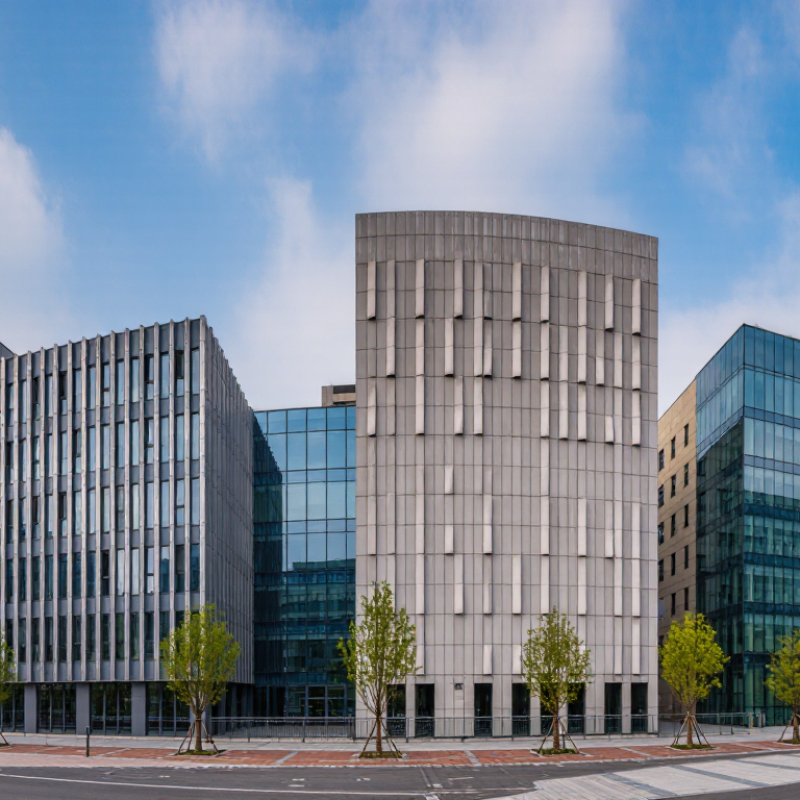
Top 10 Cladding Panels Suppliers Worldwide
Cladding panels protect building envelopes and shape their visual identity. Common types include aluminum composite panels, fiber cement boards, solid aluminum sheets, insulated sandwich panels, and high-pressure laminates. Each material behaves differently under heat, moisture, impact, and wind loads. Aluminum panels are lightweight and suit commercial façades, retail buildings, and transport facilities. Fiber cement offers a textured appearance for schools, apartments, and low-rise housing. Insulated panels combine enclosure and thermal performance, making them practical for warehouses and cold-storage buildings.
Applications should guide supplier evaluation. A coastal project needs corrosion-resistant finishes, sealed joints, and tested fixings. High-rise façades require documented fire performance, wind-load data, and controlled installation systems. Interior panels may prioritize acoustic comfort, hygiene, or easy cleaning instead. During site inspections, uneven subframes often create visible lines across otherwise quality panels. Accurate measurements matter more than attractive samples.
A perfect specification is rarely perfect on site. Suppliers should provide technical drawings, maintenance guidance, sample testing, and traceable quality records. Check coating thickness, panel flatness, moisture resistance, and replacement procedures before ordering. Some claims sound convincing but lack independent test evidence. Ask for current certifications and project references in similar climates. Ten suppliers may offer similar finishes, yet their support, tolerances, lead times, and installation advice can differ sharply. One overlooked detail can affect the façade for decades.
The ranking below uses anonymous supplier profiles and compares indicative global supply breadth, product range, technical capability, and application coverage. Performance classifications depend on the complete tested wall assembly, local regulations, and project-specific certification.
| Rank | Supplier Profile | Primary Supply Region | Main Cladding Panel Types | Typical Panel Thickness | Common Applications | Relevant Performance Considerations | Indicative Supply Coverage |
|---|---|---|---|---|---|---|---|
| 1 | Profile A — Multi-material façade supplier | Europe and the Middle East | Aluminium composite, solid aluminium, insulated metal, and perforated metal panels | 3–6 mm for composite panels; 2–4 mm for solid aluminium; 50–200 mm for insulated panels | High-rise façades, commercial buildings, transport facilities, and rainscreen systems | Wind-load resistance, corrosion protection, joint design, and reaction-to-fire classification | Very high |
| 2 | Profile B — Fibre-cement façade specialist | Europe, North America, and Asia-Pacific | Through-coloured fibre-cement sheets, profiled panels, and large-format façade boards | 8–12 mm | Residential façades, schools, offices, ventilated rainscreens, and renovation projects | Moisture movement, freeze-thaw resistance, panel fixings, and non-combustibility requirements | Very high |
| 3 | Profile C — High-pressure laminate façade supplier | Europe and Asia-Pacific | Exterior-grade high-pressure laminate panels with solid colours, wood effects, and printed finishes | 6–12 mm | Apartment buildings, schools, healthcare facilities, balconies, and soffits | UV stability, impact resistance, moisture protection, and tested fire performance of the full system | High |
| 4 | Profile D — Terracotta façade system supplier | Europe and East Asia | Extruded terracotta baguettes, rainscreen tiles, terracotta slabs, and ventilated façade panels | 20–40 mm, depending on profile and format | Cultural buildings, offices, residential towers, retail centres, and heritage-style façades | Low water absorption, frost resistance, mechanical anchoring, and thermal movement | High |
| 5 | Profile E — Insulated metal panel supplier | North America, Europe, and the Middle East | Mineral-wool insulated panels, PIR/PUR insulated panels, and concealed-fix façade systems | 50–200 mm | Industrial buildings, warehouses, cold-storage facilities, logistics centres, and cleanrooms | Thermal transmittance, air and water tightness, fire resistance, and core-specific certification | High |
| 6 | Profile F — Zinc and speciality metal façade supplier | Europe and North America | Titanium-zinc, aluminium, copper, stainless-steel, and standing-seam façade panels | Approximately 0.7–1.0 mm for zinc; 1–3 mm for many sheet-metal systems | Premium residential projects, civic buildings, roofs, façades, and architectural feature walls | Patina development, galvanic compatibility, drainage, thermal expansion, and detailing quality | Medium to high |
| 7 | Profile G — Natural and engineered stone panel supplier | Asia, Europe, and the Middle East | Granite, limestone, marble, sintered stone, and lightweight stone-faced panels | 25–40 mm for many stone systems; thinner bonded panels require engineered backing | Hotels, airports, office towers, luxury retail, civic buildings, and entrance façades | Anchorage safety, slab strength, water absorption, freeze-thaw resistance, and dead load | High |
| 8 | Profile H — Glass façade panel supplier | Asia-Pacific, Europe, and North America | Insulating glass units, ceramic-fritted glass, spandrel glass, and unitized curtain-wall panels | Typically 6–32 mm overall glazing build-up, depending on the assembly | Office towers, shopping centres, airports, hotels, and transparent or semi-transparent façades | Solar control, thermal insulation, safety glazing, condensation risk, and wind-load design | Very high |
| 9 | Profile I — Glass-reinforced concrete panel supplier | Europe, North America, and the Middle East | Glass-reinforced concrete panels, architectural precast panels, and lightweight concrete rainscreens | Approximately 12–25 mm for GRC skins; system depth varies by support frame | Large-format façades, transport buildings, museums, universities, and civic projects | Panel weight, lifting requirements, reinforcement detailing, cracking control, and anchorage | Medium to high |
| 10 | Profile J — Recycled polymer and composite façade supplier | North America, Europe, and Asia-Pacific | Recycled polymer panels, wood-plastic composites, phenolic panels, and lightweight composite boards | 6–20 mm, depending on composition and structural backing | Low-rise housing, balconies, accent walls, hospitality projects, and interior-exterior transitions | UV resistance, moisture absorption, impact performance, fire testing, and long-term colour stability | Medium |