Choosing the best Waterproof Decking from China starts with the project, not a supplier’s headline. Coastal balconies, pool surrounds, and shaded hotel terraces face different combinations of spray, heat, foot traffic, and cleaning products. That difference matters. Wood-plastic composite boards may need less routine maintenance than timber, while capped surfaces can offer added protection against stains and moisture. Yet no board performs well if water collects around joints, cut ends, or an unsuitable substructure. Details decide performance.
Global buyers should compare more than color and price. Ask for technical data on water absorption, slip resistance, UV exposure, load capacity, and maintenance requirements. Check whether test reports match the exact product being quoted. A sample is useful, but it cannot show how a deck will drain after heavy rain or age under daily use. I would not treat a polished sample as proof; it is only a starting point. Confirm board dimensions, installation gaps, fastening methods, packaging, and replacement availability before placing a large order.
China’s decking market includes many manufacturers and product grades, so “best” depends on the intended use and evidence behind each claim. Request clear specifications, consistent batch information, and written guidance for installation and care. If possible, review a completed project in a similar climate. Small differences in board profile or surface finish can affect comfort and upkeep. A careful comparison may take longer, but it can prevent costly surprises after installation. The right choice is not simply waterproof on paper; it should suit the site, perform reliably, and remain practical to maintain.
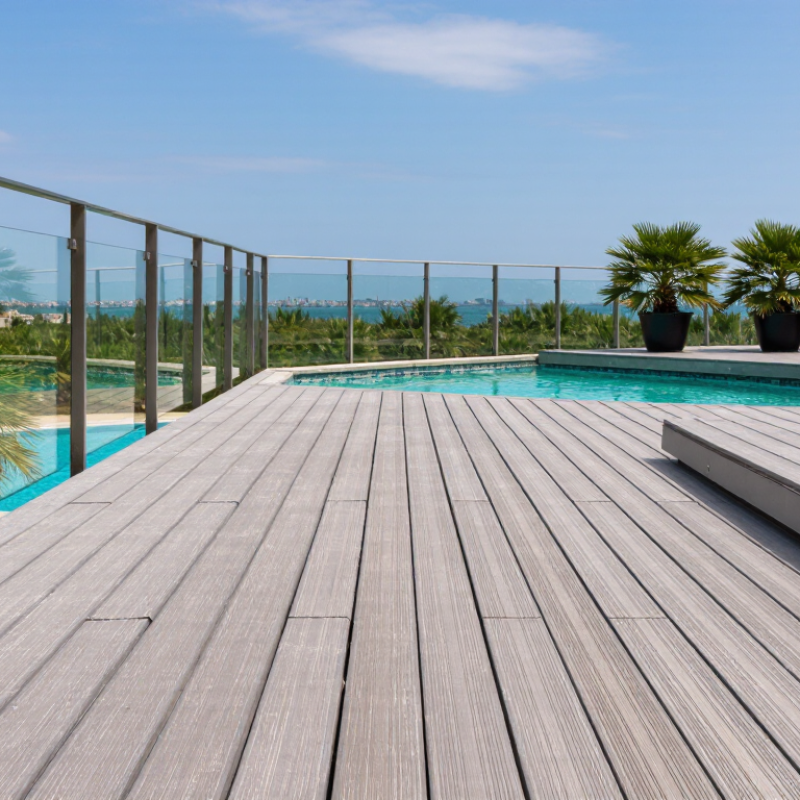
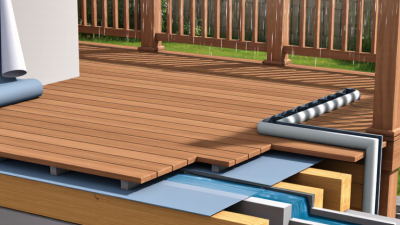
Waterproof decking is designed to limit water entry and reduce moisture-related damage. Many composite boards combine wood fibers with polymers; some add a protective outer cap. Cellular PVC boards use no wood fibers, so they avoid wood-fiber swelling, though their joints and fasteners still need careful installation. No board makes a whole deck immune to standing water.
Moisture control matters because wood changes as it gains or loses water. The USDA Forest Products Laboratory’s 2021 Wood Handbook places the fiber saturation point of most wood near 30% moisture content. Below that point, changes in moisture can cause shrinkage or swelling. A polymer-rich surface slows direct wetting, while gaps between boards let rain drain and help airflow dry the substructure. “Waterproof” can sound absolute. Real performance depends on board composition, cut edges, drainage, and upkeep; I would not assume every capped board behaves the same.
Tips: Check product test data for water absorption and dimensional stability, not just the word “waterproof.” Keep leaves from blocking gaps, and inspect cut ends and the underside after heavy rain. Small details matter. (USDA Forest Products Laboratory, Wood Handbook: Wood as an Engineering Material, 2021.)
Wood’s moisture content rises as surrounding relative humidity increases. This reference illustrates why decking materials designed to limit water absorption can help reduce moisture-related movement.
The bars show approximate equilibrium moisture content for wood at about 21°C (70°F): 6.2% at 30% RH, 9.2% at 50% RH, 13.0% at 70% RH, and 20.5% at 90% RH. These are wood reference values, not product test results or a direct comparison of decking materials. Source: USDA Forest Products Laboratory, Wood Handbook: Wood as an Engineering Material, equilibrium moisture content data.
China’s main waterproof decking materials are wood-plastic composite (WPC), capped WPC, and solid PVC. WPC blends wood fiber with thermoplastics, creating boards that resist routine rain and splashes. Capped boards add a protective polymer shell, useful where food spills and muddy shoes are common. Solid PVC contains no wood fiber and does not absorb water like wood-based composites, but it can feel warmer under direct sun.
The material choice matters more than the word “waterproof.” MarketsandMarkets estimated the global wood-plastic composites market at US$7.3 billion in 2023, forecasting US$10.6 billion by 2028. This broad market figure signals demand, not a guarantee of deck performance. Buyers should check the board’s core composition, cap coverage, slip-test results, and installation requirements. Small details count.
For a coastal balcony, inspect drainage gaps and fastening instructions before comparing colors. In humid climates, trapped water beneath boards can still affect the substructure, even when the surface resists moisture. Ask suppliers for test reports covering water absorption, dimensional stability, and UV exposure, and confirm the tested product matches the quotation. Samples help, but one sunny afternoon proves little. Performance varies.
When comparing waterproof decking, look beyond the label. Ask how the boards and joints perform after repeated rain, standing water, and temperature changes. A small sample can show surface texture, but it cannot prove long-term durability. Request test reports that explain the test method and conditions. Check whether the results cover UV exposure, moisture, and freeze-thaw cycles where relevant. Details matter.
Safety deserves a close look. Walk on a wet sample if possible, and ask for slip-resistance data rather than relying on appearance. Check edge finish, fastener placement, and whether the installation allows water to drain. A smooth board may feel pleasant underfoot when dry, yet become slippery after rain. Not always obvious. Heat and glare can also affect comfort in sunny areas, so compare samples outdoors.
Maintenance claims need practical questions. What cleaner is recommended? Can food stains or muddy footprints be removed with ordinary washing? Ask whether pressure washing or abrasive tools could damage the surface. Also compare replacement-board availability and written warranty terms. These details vary by product and installation, so confirm them with technical documents. I would not judge a deck from one showroom visit; real weather exposes weaknesses that a clean display may hide.
| Comparison Factor | Capped Wood-Plastic Composite (WPC) | Uncapped WPC | Cellular PVC Decking | Pressure-Treated Wood | Aluminum Decking |
|---|---|---|---|---|---|
| Water resistance | Protective polymer capping helps limit surface water absorption. Cut ends, fastener holes, and joints may still admit moisture; it should not be treated as a waterproof barrier. | Wood fibers are exposed, so the boards can absorb more moisture than capped products. Moisture changes may contribute to swelling, staining, or surface wear. | Polymer material does not absorb water like wood-based products. Proper drainage and correctly detailed joints are still needed to prevent water from collecting beneath the deck. | Wood absorbs and releases moisture. Preservative treatment helps protect against decay and insects but does not make the boards waterproof. | Metal boards do not absorb water. Drainage, fasteners, coatings, and contact with dissimilar metals should be considered in the system design. |
| Durability considerations | Often resists stains and surface fading better than uncapped WPC, but performance varies by formulation, cap coverage, installation, and exposure. | Can be affected by moisture cycling, fading, staining, and surface wear. Product quality and installation details strongly influence service life. | Resistant to rot and insect damage. Expansion, contraction, surface scratching, and heat-related movement should be accounted for during installation. | Durability depends on wood species, treatment, climate, ground clearance, drainage, and maintenance. Boards can weather, check, or split over time. | Resistant to rot and insects; alloy, finish, coating quality, and installation affect corrosion performance. Dents and scratches may be possible. |
| Wet-surface safety | Texture and drainage can support traction, but wet slip resistance is product-specific and can be affected by dirt, algae, and wear. | Traction depends on board profile, surface condition, and maintenance. Organic growth or a worn surface can reduce grip. | Surface texture varies by product. Verify wet slip test results for the exact board and intended application rather than relying on material type alone. | Traction depends on grain, surface finish, board condition, and maintenance. Algae, mold, and worn coatings can make a deck slippery when wet. | Surface profile and drainage openings affect traction. Bare or coated metal can become slippery when wet; check application-specific test data. |
| Heat and comfort | Can become hot in direct sun. Color, density, airflow, and climate influence surface temperature. | Can become hot in direct sun. Lighter colors may absorb less solar heat than darker colors, though actual temperatures vary. | Can become hot in direct sun, and thermal movement should be allowed for. Ask for product guidance for the project’s climate. | Surface temperature varies with color, exposure, and local weather. Wood may also develop splinters as it weathers. | Can heat up substantially in direct sun. Consider shade, light-colored finishes, and the intended barefoot-use conditions. |
| Routine maintenance | Usually needs periodic washing to remove dirt and organic growth. Follow the manufacturer’s cleaning instructions; avoid unsuitable abrasive tools. | Periodic cleaning is needed. Depending on the product and exposure, staining or fading may require additional attention. | Generally needs washing to remove dirt and surface deposits. Use cleaning products and methods approved for the specific product. | Regular cleaning and inspection are needed. Depending on the species, treatment, finish, and exposure, resealing or refinishing may be required. | Usually needs periodic washing and inspection of fasteners and finish. Use cleaners compatible with the alloy and coating. |
| Installation checks | Follow specified joist spacing, expansion gaps, fastening method, and edge-sealing guidance. Provide effective drainage and ventilation. | Follow product-specific spacing and fastening instructions. Allow for moisture-related movement and prevent water from being trapped. | Allow for thermal expansion and contraction. Follow the specified fastening system, spacing, and drainage details. | Use appropriate corrosion-resistant fasteners, maintain ventilation and drainage, and follow local requirements for treated wood. | Use compatible fasteners and follow the specified substructure, thermal movement, and drainage requirements. |
| Best fit | Buyers seeking a low-maintenance, wood-look option with improved surface protection, provided the product’s test data and installation details suit the project. | Buyers prioritizing a wood-fiber composite option who accept more exposure to moisture-related surface changes and maintenance needs. | Projects prioritizing low water absorption and resistance to rot, where heat behavior, movement, and the product’s slip data are acceptable. | Projects where a natural material is preferred and owners can accommodate inspections and finish maintenance. | Projects needing a non-wood decking material with low water absorption, where cost, thermal comfort, and surface traction have been evaluated. |
| Buyer verification | Request product-specific water absorption, slip-resistance, weathering, and structural test reports, plus installation and warranty terms. | Request product-specific moisture, weathering, slip-resistance, and structural data. Confirm care requirements and warranty exclusions. | Request slip-resistance and structural data, temperature and expansion guidance, fire-performance information where required, and warranty terms. | Confirm wood species, preservative-treatment documentation, applicable local compliance, grade, and maintenance instructions. | Confirm alloy and coating specifications, structural capacity, corrosion-related guidance, wet slip data, and local code compliance. |
Note: These are general material comparisons, not guarantees for every product. “Water-resistant” does not mean that a complete deck assembly is waterproof. Compare current, product-specific test reports and installation instructions, and assess wet traction for the intended site and use.
Choosing decking for a climate means checking moisture, temperature swings, sunlight, and drainage—not just the product’s waterproof rating. The World Meteorological Organization’s State of the Global Climate 2023 reported that global mean temperature was about 1.45°C above the 1850–1900 average. That figure does not predict conditions at a specific home, but it underlines why local exposure matters. In hot, sunny locations, darker boards can become uncomfortable underfoot, while heat can increase movement in some composite products. Leave the manufacturer’s specified expansion gaps. Small details matter.
In humid or rainy regions, prioritize drainage, ventilation beneath the deck, and surfaces that retain grip when wet. The USDA Forest Products Laboratory’s Wood Handbook explains that wood absorbs and releases moisture, causing dimensional changes; persistent dampness can also raise decay risks. In freeze-thaw areas, water trapped in joints may worsen cracking or surface damage, so avoid designs that hold standing water. Coastal sites need careful fastener selection and regular rinsing because salt can accelerate corrosion. ASTM D7032 sets performance requirements for wood-plastic composite decking, but a standard cannot replace checking local conditions. I would inspect a shaded corner after rain, too; specifications rarely show how quickly a real deck dries.
Global buyers should assess waterproof decking through evidence, not polished product photos. Ask suppliers for technical data covering water absorption, slip resistance, UV exposure, and dimensional stability. Check whether test reports identify the exact product construction and sample date. A report for a similar-looking board may not represent the shipment you receive. Request samples from the intended production batch, then inspect cut edges, surface texture, and color consistency. Looks can mislead.
Tips: Ask how the boards perform after repeated wetting and drying. Confirm recommended joist spacing, drainage gaps, fasteners, and expansion allowances. These details affect service life as much as the board itself.
Supplier quality also depends on clear production controls. Ask how raw materials are tracked and how defects are recorded. A factory visit or live video walkthrough can reveal storage conditions, inspection steps, and packaging practices. Check that the supplier explains what happens when samples differ from bulk orders. Keep written specifications and approved samples for comparison. I would not treat one test result as a guarantee: heat, shade, installation, and maintenance vary by project. Even a reliable supplier may not predict every site condition, so request guidance for the intended climate and use.