As a leading plastics recycler and producer of green composite.

Leave Your Message

10 Best Waterproof Decking Materials for Outdoor Use?

Choosing the right Waterproof Decking material can prevent years of swelling, staining, and costly repairs. Outdoor decks face rain, snow, spilled drinks, standing water, and intense sunlight. A surface that looks perfect in a showroom may perform poorly beside a wet garden or pool.

Building-science consultant Steve Easley has often emphasized, “Moisture is the number one enemy of building materials.” That principle shapes this guide. The ten options reviewed here include capped composite, PVC, aluminum, porcelain pavers, rubber membranes, teak, modified wood, and other practical systems. Each material handles water differently. Some resist absorption. Others depend on sloped framing, hidden drainage, sealed joints, or careful installation.

Details matter most.

A capped composite board may suit a busy family deck with muddy shoes and frequent cleaning. PVC can offer strong moisture resistance, but it may feel hotter under direct summer sun. Aluminum sheds water effectively and lasts for decades, yet its metallic appearance may not suit every home. Natural teak offers warmth and character, although maintenance and responsible sourcing require attention.

No material is perfect. That is worth admitting. Even highly water-resistant decking can fail when fasteners, joists, or flashing trap moisture underneath. This article compares durability, maintenance, comfort, appearance, installation demands, and long-term value. It also considers real outdoor conditions, such as puddles near stairs and leaves packed into narrow gaps. Use these comparisons as a practical starting point, then confirm local climate requirements and manufacturer specifications before installation.
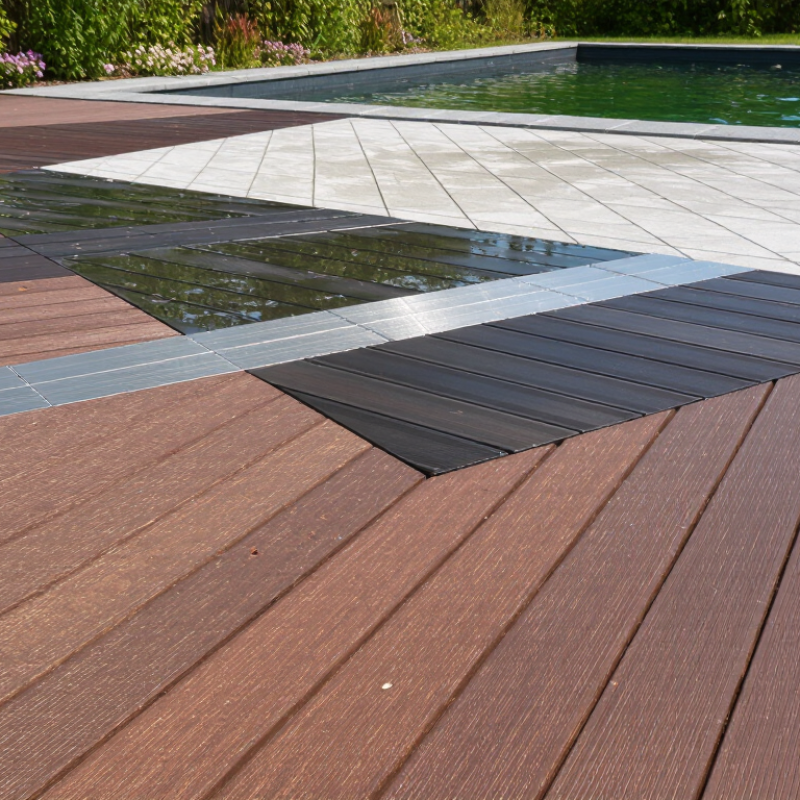
10 Best Waterproof Decking Materials for Outdoor Use?

Waterproof Decking: Definition, Uses, and Essential Performance Standards

Waterproof decking is more than a board that repels rain. It is a complete outdoor surface system. The boards, joints, membrane, slope, and drainage path must work together. A useful system should resist standing water, repeated wetting, ultraviolet exposure, and freeze-thaw movement. Surface texture also matters when rain covers the walking area.

Performance needs measurable evidence. ASTM E331 evaluates water penetration under controlled pressure, while ASTM D7032 addresses performance requirements for plastic lumber and composite decking. The U.S. Forest Products Laboratory reports that wood decay commonly develops when moisture content remains above 20 percent. That figure explains why hidden gaps and poor ventilation can damage even treated materials. Waterproofing fails quietly. Water often enters through fastener holes, edge cuts, or blocked drainage channels.

Material selection depends on exposure and maintenance. PVC-based boards resist water absorption, while capped composite boards add a protective outer layer. Modified wood can perform well, but it still needs careful detailing and inspection. In coastal areas, salt, wind-driven rain, and corrosion require separate testing. I would not trust a “waterproof” claim without test results, installation limits, and documented slip performance. That judgment is imperfect, because real weather is less controlled than a laboratory. A deck should shed water visibly after rainfall, not hold shallow puddles near the house. Small details decide long-term reliability.
How to Evaluate Waterproof Decking Materials for Outdoor Applications

Choosing among ten waterproof decking materials requires more than reading the word “waterproof.” Evaluate the complete assembly: surface, fasteners, drainage, joints, and supporting structure. NOAA’s 2023 U.S. Billion-Dollar Weather and Climate Disasters report recorded 28 major events, showing why intense rain deserves serious planning. A deck that sheds water during light rain may fail during wind-driven storms.

Begin with documented testing. Capped composites and PVC should provide manufacturer test results for water absorption, slip resistance, flexural strength, and thermal movement. ASTM D7032 offers performance criteria for wood-plastic composite decking and guardrails. Porcelain paving deserves a different check. ASTM C373 measures water absorption, and porcelain products generally meet a 0.5% maximum absorption classification. Concrete, stone, and aluminum can perform well, but their joints and fixings still create weak points.

Moisture management matters most. The USDA Forest Products Laboratory’s Wood Handbook explains that decay fungi generally need wood moisture above 20%. Use ventilation, adequate slope, and separated joists where possible. Inspect cut edges carefully. They are easy to overlook. A surface sample can also mislead; laboratory resistance does not guarantee safe performance after years of sunlight, grit, freezing, and repeated loading. I would request third-party reports, installation limits, and maintenance records before comparing prices. Even then, the decision remains imperfect. Local exposure may matter more than the material’s headline rating.

10 Best Waterproof Decking Materials for Outdoor Use? - How to Evaluate Waterproof Decking Materials for Outdoor Applications

Rank Material Waterproof Performance Expected Service Life Slip Resistance Maintenance UV and Rot Resistance Relative Cost Best Outdoor Application
1 Aluminum Decking Does not absorb water; properly interlocking profiles can create a highly water-shedding surface. 40–60+ years High with textured finish Low Excellent High Balconies, rooftop decks, coastal homes, and areas requiring long-term durability.
2 Solid PVC Decking Non-porous and highly resistant to rain, snow, humidity, and standing moisture. 25–40 years Medium to high Low Excellent High Pool surrounds, wet climates, residential decks, and low-maintenance outdoor spaces.
3 Capped Composite Decking A polymer cap limits water absorption; exposed cuts and unsealed joints still require careful detailing. 25–40 years Medium to high Low Very good Medium to high Family decks, patios, garden terraces, and projects seeking a wood-like appearance.
4 Fiberglass-Reinforced Plastic (FRP) Impervious to water when the laminate and surface finish remain intact; seams must be sealed correctly. 25–40 years High with grit surface Low to medium Very good Medium to high Walkways, marine environments, industrial platforms, and wet-service balconies.
5 Porcelain Pavers on a Pedestal System Very low water absorption; the pedestal cavity and slope provide drainage beneath the surface. 30–50+ years High with rated texture Low Excellent Medium to high Rooftop terraces, balconies, courtyards, and premium outdoor living areas.
6 HDPE Plastic Lumber Non-absorbent plastic resists water damage, swelling, and fungal decay. 25–50 years Medium; depends on texture Low Very good Medium Docks, waterfront decks, utility platforms, and moisture-prone garden structures.
7 Rubber Deck Tiles Water-resistant and flexible; drainage depends on the tile pattern and subfloor design. 10–20 years Excellent Low Good to very good Medium Play areas, pool surrounds, exercise spaces, and surfaces where cushioning is useful.
8 EPDM Waterproof Deck Membrane Creates a continuous waterproof layer when seams, edges, penetrations, and drainage details are installed correctly. 20–35 years Medium; add a textured wear layer Medium Excellent Medium Low-slope decks, balconies, roof decks, and waterproofing systems installed below a walking surface.
9 Concrete Pavers Durable in wet conditions, but concrete is porous; sealing and effective base drainage improve performance. 25–50+ years High with textured finish Medium Very good Low to medium Ground-level patios, walkways, courtyards, and heavy-use outdoor areas.
10 Waterproof-Coated Exterior Plywood System The coating can block liquid water, but exposed edges, fasteners, joints, and damaged areas are vulnerable. 10–20 years Medium to high with aggregate finish Medium to high Medium Low to medium Covered decks, balconies, exterior stairs, and projects requiring a lightweight structural surface.
Evaluation note: A decking material is rarely waterproof by itself. Overall water protection also depends on slope, drainage, flashing, joist protection, fastener detailing, sealed penetrations, and properly treated joints. “Expected service life” is a general range and varies with climate, installation quality, loading, maintenance, and exposure.

Ten Leading Waterproof Decking Materials and Their Key Characteristics

Outdoor decking is rarely “waterproof” in the strict sense. Water-resistant performance depends on seams, drainage, and installation. Freedonia’s 2024 decking industry report identifies composites and plastics as major growth categories, driven by lower maintenance needs.

Ten leading materials deserve different expectations. PVC decking resists water absorption and works well near pools. Capped composite uses a protective polymer shell over wood fibers. Uncapped composite costs less, but exposed edges need sealing. Pressure-treated wood is economical, although regular staining remains necessary. Cedar offers natural decay resistance and a warm texture.

Redwood performs similarly, but supply and grading vary. Tropical hardwood provides dense, durable boards, yet requires careful sourcing. Aluminum decking will not rot and sheds rain efficiently. Fiberglass decking is lightweight and stable, but surface repairs can be difficult. Rubber membrane systems create continuous waterproof layers, especially over occupied spaces.

I have seen beautiful wood decks fail early because water stayed beneath furniture. Appearance can mislead.

Tips: Check slope, flashing, joist spacing, and fastener compatibility before choosing boards. The USDA Forest Products Laboratory notes that wood decay risk rises when moisture remains above about 20 percent. Use that figure as a warning, not a guarantee. Composite boards also need airflow. I once underestimated drainage around a stair landing; the material was sound, but the design was not. Imperfect planning still becomes expensive.

Installation Methods, Drainage Planning, and Maintenance Requirements

Waterproof decking starts with the structure beneath the surface. Suitable options include PVC membranes, composite boards, aluminum panels, porcelain pavers, fiberglass grating, treated hardwood, rubber tiles, stone, concrete, and thermoplastic sheets. Each material needs a compatible installation method. Membranes require sealed seams and carefully prepared substrates. Interlocking boards need hidden clips, expansion gaps, and firm joists. Porcelain pavers usually sit on adjustable supports, allowing water to move below them. I have seen attractive decks fail because installers focused on the surface, not the framing.

Drainage planning deserves equal attention. Set the deck with a consistent slope, often about two percent, away from walls and door thresholds. Keep drainage channels clear, and install flashing where the deck meets the building. Leave ventilation gaps around joists and avoid blocking outlet paths with trim. During inspections, I check low corners after rainfall. Standing water reveals problems quickly. My own mistake was trusting a nearly level surface; it looked tidy, but moisture stayed beneath the boards.

Tips: Use stainless fasteners suited to the material. Seal cut edges immediately. Clean leaves from gaps each season. Inspect seams, flashing, and supports twice yearly. Mild soap and water are usually safer than harsh chemicals. Replace cracked tiles or loose boards early. Still, maintenance depends on shade, salt air, freezing temperatures, and foot traffic, so a rigid schedule may need adjustment.

Safety, Cost, Sustainability, and Material Selection Considerations

10 Best Waterproof Decking Materials for Outdoor Use?

Waterproof decking should be judged by safety, cost, sustainability, and local weather. A surface that survives rain may still become dangerously slippery. Look for tested slip resistance, textured finishes, and gaps that drain water quickly. Rounded edges also reduce trips, especially on steps.

Common options include capped composite boards, PVC decking, aluminum, treated timber, modified wood, recycled plastic lumber, rubber tiles, porcelain pavers, stone, and fiberglass panels. Each has trade-offs. PVC and aluminum resist moisture well, but they may feel hot under strong sunlight. Timber can look warmer, yet it needs sealing and careful inspection around fasteners. Porcelain and stone offer long service lives, although poor installation can create cracked edges or uneven joints.

Cost should include delivery, framing, drainage, cleaning, repairs, and replacement. A cheaper board may become expensive if it needs annual coating. Sustainable choices are not automatically better. Recycled plastic can reduce waste, while some composite products are difficult to recycle later. Ask about recycled content, expected lifespan, repairability, and disposal routes.

I would not choose a material from appearance alone. Wet samples reveal more than showroom lighting. Check a small test area after rain, and compare temperatures at midday. Local building requirements, ventilation, and structural loading also matter. My own selection process remains imperfect; durability claims can sound precise without reflecting real household use. A deck beside trees, salt air, or a pool needs stricter maintenance planning.