




Applications of Wood-Plastic Composite Wall Panels in Construction
With the rapid development of the construction industry, energy conservation and environmental protection have received increasing attention. Noise has become one of the major environmental pollutants. Various types of noise exist in our living environment, such as noise from vehicles, construction activities, and other sources of disturbance, which can significantly affect people’s quality of life. Currently, commonly used noise reduction methods involve the use of soundproofing materials, such as soundproof doors, wall panels, and sealing strips. Traditional soundproof wall materials mainly include glass wool, rock wool, and polystyrene foam products. However, these materials have certain shortcomings: the former tends to be heavy, environmentally polluting, and complicated to construct, while the latter is prone to aging, with suboptimal thermal insulation and soundproofing performance.
With the rapid advancement of science and technology, lightweight-filled wood-plastic composite (WPC) wall materials have undergone technical improvements. However, existing technologies are unable to provide stable support and effective vibration damping, resulting in poor seismic performance of walls and insufficient fire and moisture resistance, thereby limiting their practical application.
To overcome the shortcomings of existing technologies, a lightweight-filled WPC wall material has been proposed. This material addresses the issues of insufficient structural support and vibration damping in existing wall technologies, enhancing seismic performance, providing fire and moisture resistance, and improving practical usability.
One invention involves a lightweight-filled WPC wall material, which includes a wall, a decorative panel, and a WPC layer. The WPC layer is bonded to the front end of the wall, and the decorative panel is positioned at the front end of the WPC layer, bonded via adhesive. The WPC layer comprises a vibration-damping support layer and a fire- and moisture-resistant layer. The vibration-damping support layer is bonded to the front end of the wall and to the rear end of the fire- and moisture-resistant layer. The decorative panel is placed at the front end of the fire- and moisture-resistant layer and bonded via adhesive.
The vibration-damping support layer consists of a WPC board, fiberglass mesh, rubber-plastic cotton layer, aluminum foil moisture barrier, sound-absorbing panel, and light steel keel. The sound-absorbing panel is bonded to the front end of the wall. The aluminum foil moisture barrier has a rectangular structure and is bonded via adhesive to the front end of the sound-absorbing panel. The rubber-plastic cotton layer is bonded to the front end of the aluminum foil moisture barrier, with fiberglass mesh arranged at its front end. The WPC board is bonded to the front end of the fiberglass mesh. The light steel keel is vertically embedded into the top of the rubber-plastic cotton layer, aluminum foil moisture barrier, and sound-absorbing panel, and bonded to their top surfaces.
The fire- and waterproof layer includes a melamine board, fireproof sealing strip, dry powder bag, asphalt waterproof tape, sealing strip, and fireproof grille. The decorative panel is positioned at the front end of the melamine board and bonded via adhesive. The melamine board is bonded to the right end of the fireproof sealing strip, which contains a dry powder bag at its upper interior. The fireproof sealing strip is bonded via adhesive to the right end of the asphalt waterproof tape. The sealing strip is located at the lower interior of the fireproof sealing strip and asphalt waterproof tape and is bonded to both. The fireproof grille is bonded to the left end of the asphalt waterproof tape.
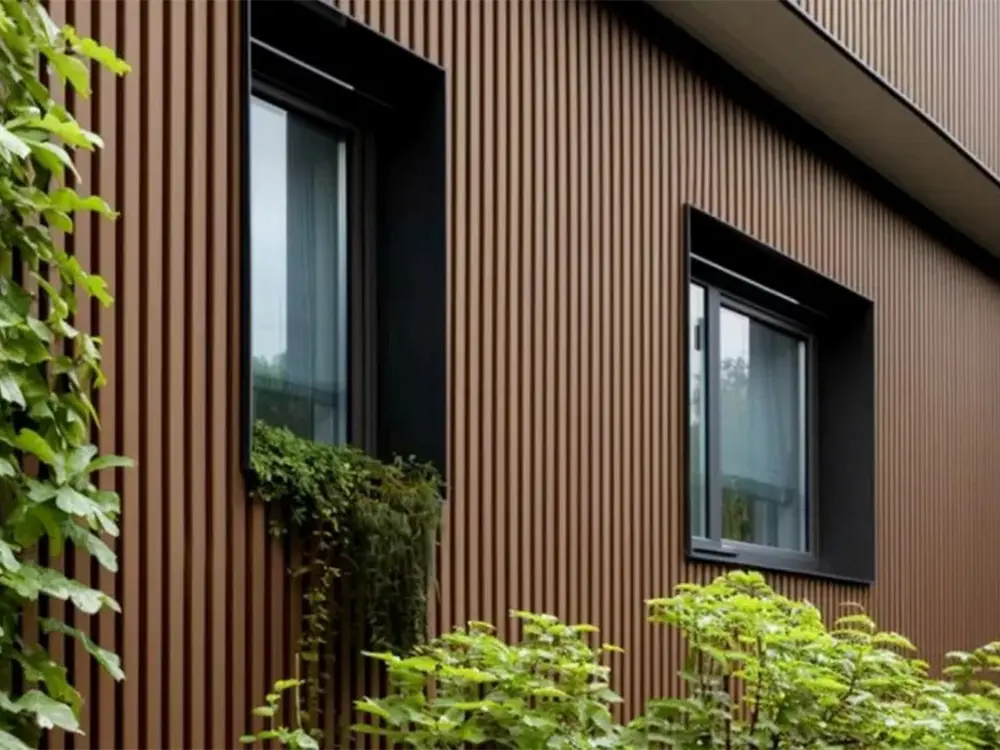
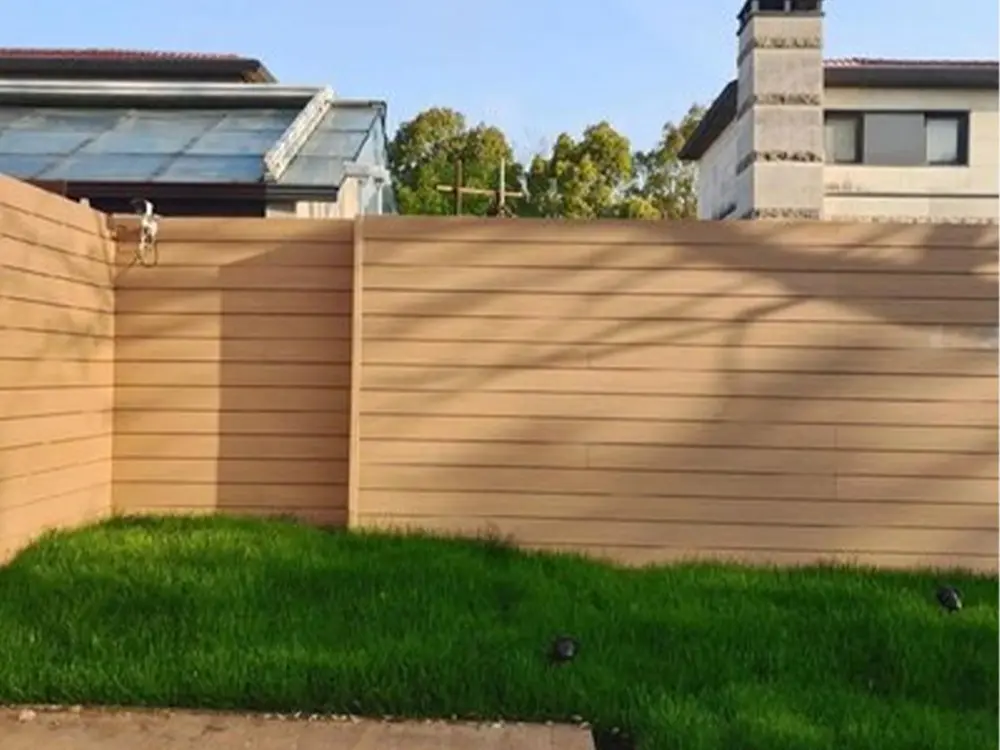
By using WPC wall columns as the main structural material and applying them in wood-structured walls, the material advantages of WPC, the structural benefits of wood construction, and the strength advantages of frame-shear structures can be fully utilized. This research has developed an integrated WPC frame-shear wood wall system with excellent properties including thermal insulation, sound insulation, and shear resistance. This innovation is of great significance for enhancing the international market competitiveness of WPC products in China, expanding their application scope, and promoting the development of modern prefabricated wood-structured buildings.