As a leading plastics recycler and producer of green composite.

Leave Your Message

Top Benefits of Using WPC Decking for Outdoor Spaces?

WPC Decking has become increasingly popular for outdoor spaces due to its unique blend of wood and plastic. According to a recent market research report, the global WPC market is expected to reach $6.3 billion by 2027. This growth highlights the rising demand for sustainable and low-maintenance materials in the construction and landscaping sectors.

One significant advantage of WPC Decking is its durability. Unlike traditional wood, WPC resists fading, staining, and moisture damage. This longevity is appealing for homeowners looking to invest in long-lasting outdoor solutions. Additionally, WPC Decking offers aesthetic versatility, allowing for a variety of finishes and colors that suit different design styles.

Moreover, WPC Decking is an eco-friendly choice. It often contains recycled materials, promoting sustainability. However, some manufacturers may not fully adhere to eco-friendly practices. Therefore, it’s crucial to research and select quality brands. In the burgeoning decking market, WPC Decking stands out, providing both beauty and resilience to outdoor spaces.
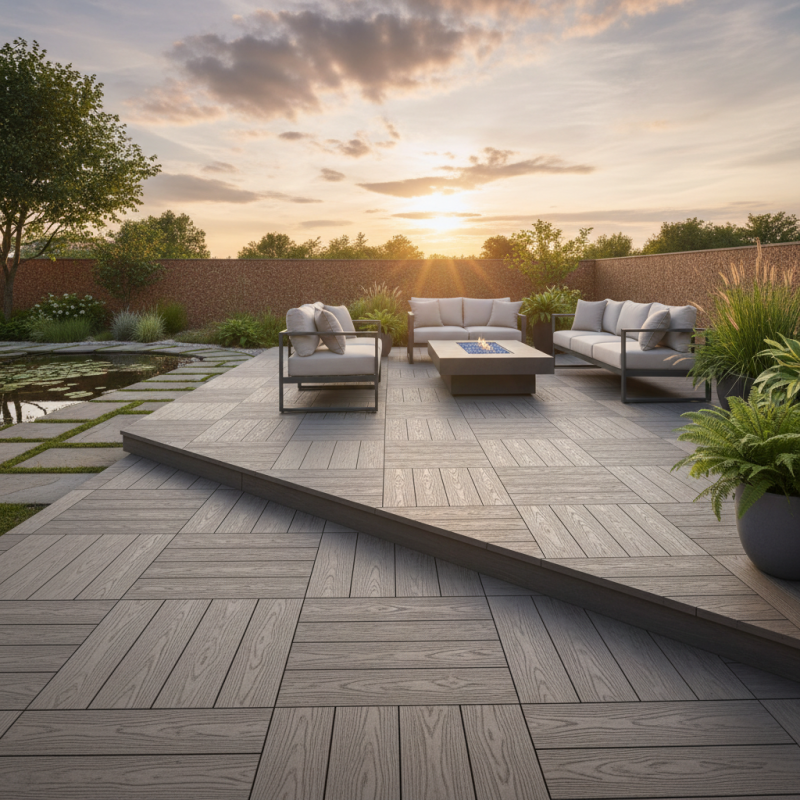
Top Benefits of Using WPC Decking for Outdoor Spaces?

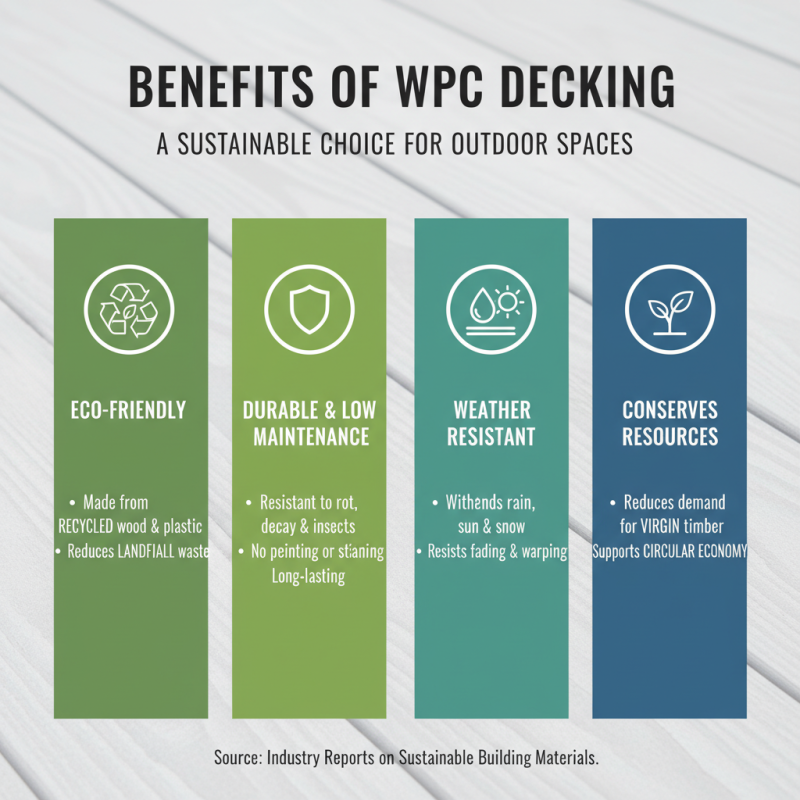
Benefits of WPC Decking: A Sustainable Choice for Outdoor Spaces

Top Benefits of Using WPC Decking for Outdoor Spaces?

WPC decking, or wood-plastic composite decking, is gaining traction as a sustainable option for outdoor spaces. With an increase in environmental awareness, many homeowners are seeking materials that minimize ecological impact. According to industry reports, WPC decking is made from recycled wood and plastic, significantly reducing waste. This composition not only conserves natural resources but also provides durability.

Research shows that WPC decking lasts longer than traditional wood. It is resistant to rot, mold, and insects, reducing the need for harmful chemical treatments. The durability aspect is further backed by data indicating that WPC can last up to 25 years with proper maintenance. Some studies reveal that this composite material can maintain its appearance over time, requiring less frequent replacement.

However, challenges remain. While WPC offers sustainability, production can still use considerable energy. Understanding these trade-offs is crucial for informed choices. The carbon footprint of WPC can vary based on manufacturing practices. Therefore, selecting reputable manufacturers with eco-friendly policies is vital for maximizing benefits in outdoor design.
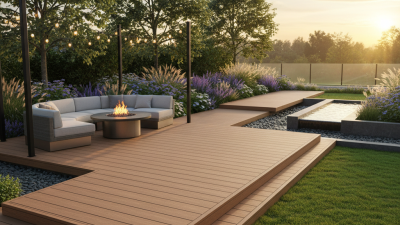
Durability and Longevity: How WPC Decking Outlasts Traditional Materials

WPC decking, made from wood plastic composites, combines durability with a long lifespan. Unlike traditional wood, WPC doesn’t warp or split. It withstands harsh weather, heavy foot traffic, and is resistant to pests. Homeowners appreciate this low-maintenance solution for outdoor spaces.

Weather changes can be brutal on outdoor materials. WPC decking maintains its appearance and function much longer than wood. Some may find it surprising that it resists fading and staining effectively. This means less time spent on repairs or refinishing. However, some early installations have shown signs of wear, prompting a need for ongoing evaluation.

Choosing WPC doesn’t mean settling for less. It offers aesthetic appeal along with strength. Many appreciate the variety of colors and textures available. Yet, some might question its environmental impact compared to pure wood. Finding the right balance in sustainability remains a topic worth discussing.

Low Maintenance Requirements: Easy Upkeep for Busy Homeowners

Top Benefits of Using WPC Decking for Outdoor Spaces?

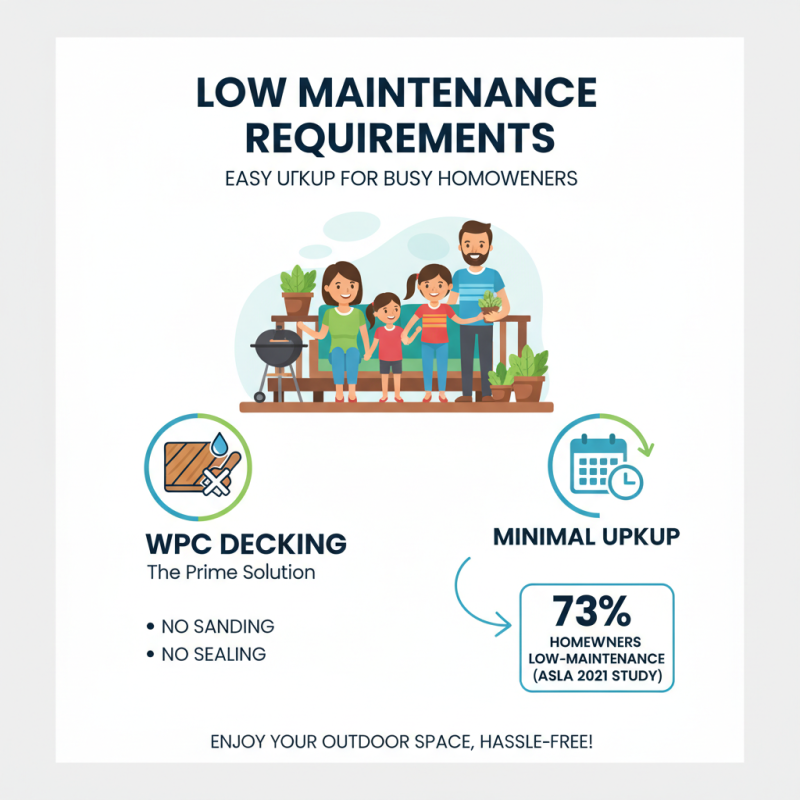
When it comes to outdoor spaces, low maintenance is key for busy homeowners. WPC decking offers a prime solution. Unlike traditional wood, WPC, or wood-plastic composite, requires minimal upkeep. Homeowners can enjoy their decks without the hassle of constant sanding or sealing. This feature is significant in a 2021 study by the American Society of Landscape Architects, which noted that over 73% of homeowners prefer low-maintenance materials for their outdoor projects.

Additionally, WPC decking is resistant to rot, splintering, and fading, making it a durable choice. Reports from the North American Deck and Railing Association indicated that 83% of deck owners believe low maintenance significantly enhances their lifestyle. Regular cleaning with soap and water is often enough, alleviating the time and cost associated with traditional decking materials. This is a substantial advantage for those balancing work, family, and social activities.

However, WPC decking does have its drawbacks, such as potential color fading over time. Proper installation can help, but not everyone is skilled. Many homeowners may overlook this. Research shows that maintenance difficulties can arise, especially if the decking is not installed correctly. Awareness of these issues is essential, ensuring that homeowners make informed choices about their outdoor spaces.

Aesthetic Variety: Design Flexibility of WPC Decking for Any Style

WPC decking is gaining popularity for outdoor spaces due to its design flexibility. This composite material blends wood fibers with plastic, allowing it to mimic natural wood's appearance. Homeowners appreciate the variety of finishes and colors available. From rustic to modern, WPC decking can fit any architectural style.

The aesthetic appeal of WPC decking lies in its versatility. It can be textured or smooth, providing options for different tactile experiences. With various profiles and widths offered, each project can have a unique character. Lighting and landscaping can enhance these features, creating an inviting atmosphere.

However, it’s essential to consider maintenance aspects. Some finishes may fade over time, requiring periodic touch-ups. While WPC offers durability, its performance may depend on climate conditions. Homeowners should reflect on their choices, ensuring they select finishes that will maintain the desired aesthetic in the long run. This ongoing evaluation is a crucial part of enhancing outdoor spaces effectively.

Eco-Friendly Features: The Environmental Advantages of WPC Materials

WPC decking, made from wood and plastic composites, offers significant eco-friendly benefits. It utilizes recycled materials, reducing waste in landfills. This innovative material minimizes the reliance on traditional wood sources, helping to conserve forests. Using WPC decking reduces environmental impact while enhancing outdoor spaces.

Beyond sustainability, WPC decking is highly durable. It resists moisture, insects, and warping, providing a long-lasting solution for outdoor areas. Homeowners can enjoy outdoor living with less maintenance and reduced need for chemical treatments. However, potential users should consider its initial cost and weight compared to traditional materials.

WPC products can sometimes wear unevenly or discolor with time, leading to concerns about aesthetics. Buyers should choose reputable suppliers to ensure quality. Collectively, these eco-friendly attributes of WPC highlight not just a trend but a responsible choice for environment-conscious consumers.